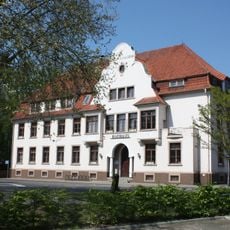
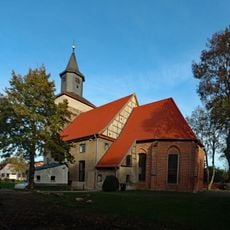
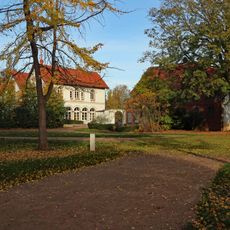
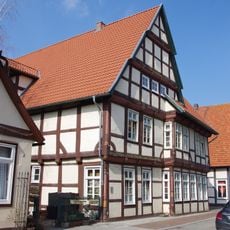
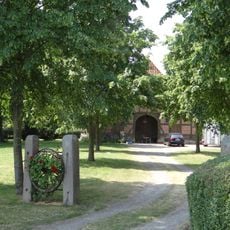
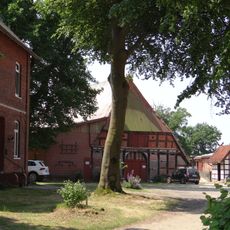
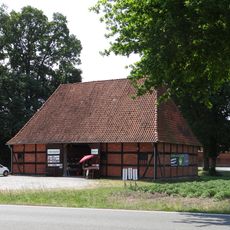
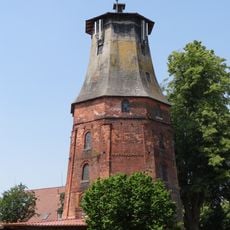
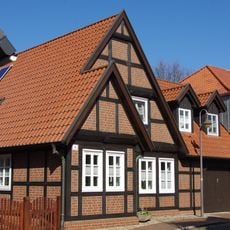
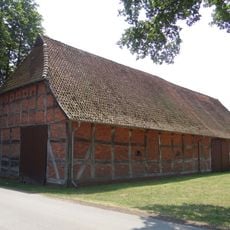
Heisenhof, Estate in Dörverden, Germany
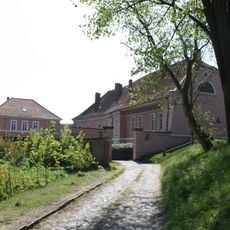
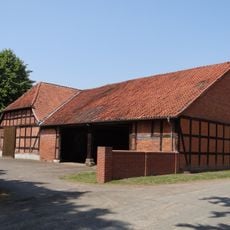
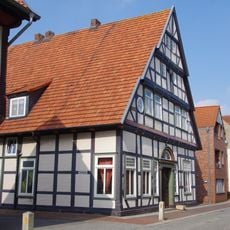
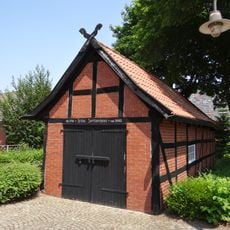
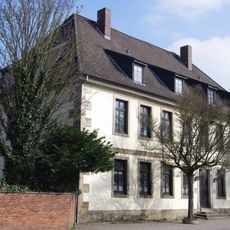
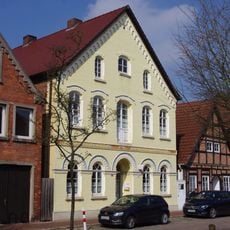
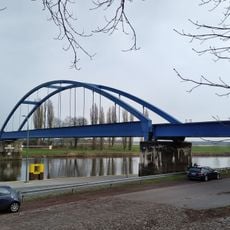
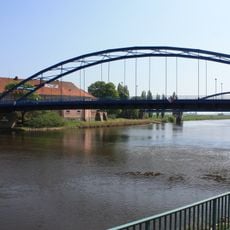
Heisenhof, also called Drübberanlage and formerly Gut Ramdohr zu Drübber, is a former agricultural estate in the Barme district of Dörverden, Lower Saxony. The grounds cover 24,000 square metres and include the manor house with its outbuildings; the site lies near the Weser, where in February 1758 French troops under General Chabot fought Hanoverian units.
The Heisenhof was a knight's estate of the von Ramdohr family from 1686 to 1839, acquired by Albrecht Andreas von Ramdohr in 1686. In February 1758, French troops under General Chabot fought Hanoverian units nearby and forced the Weser crossing. The Ramdohrs sold it to the Hanover crown in 1839, and Adolf Heise bought it in 1898. From the 1930s to 1945 it belonged to the Eibia ammunition factory site, then served as a Bundeswehr officers' mess until 1996.
The name Heisenhof comes from Adolf Heise, who bought the estate in 1898; until 1839 it was called Gut Ramdohr zu Drübber after the von Ramdohr family. From 2004 to 2011 the property belonged to the Wilhelm-Tietjen-Stiftung für Fertilisation Ltd., whose shareholder was the right-wing extremist lawyer Jürgen Rieger, and it served as a regional meeting point for the neo-Nazi scene. A citizens' initiative formed in 2004 and demonstrations were held repeatedly against this use.
The buildings are in poor condition and there is no valid building permit or approved sewage system, so the site can only be used to a very limited extent. A court-confirmed demolition order remains in place. Access rules are set by the Verden district, so check them before visiting.
Despite standing empty for years, the property is at the center of an ongoing dispute between local authorities and its owners over whether it should be kept or torn down. This unresolved situation makes it a rare example of how abandoned rural estates are handled in the German countryside.
The community of curious travelers
AroundUs brings together thousands of curated places, local tips, and hidden gems, enriched daily by 93,233 contributors worldwide.