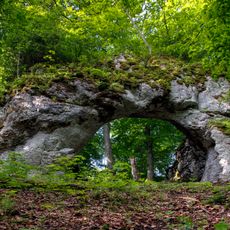
Heidentor, Archaeological site in Egesheim, Germany
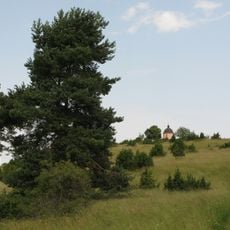
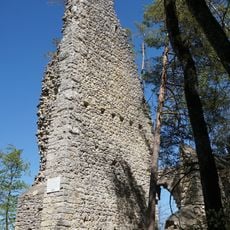
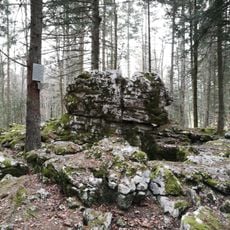
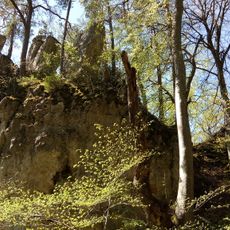
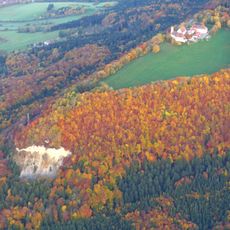
Heidentor is an archaeological site in Egesheim, Baden-Württemberg, marked by a natural rock arch set into a wooded hillside. The arch and the surrounding terrain show traces of human use across several prehistoric periods.
The site served as a sanctuary during the Iron Age, with finds dating from the late Hallstatt to the early La Tene period, showing it was visited over many generations. Its original function was eventually forgotten, and later inhabitants gave it a name rooted in Christian vocabulary.
The name Heidentor, meaning roughly "Pagan Gate", reflects how later Christian communities saw this place as something foreign and pre-Christian. Today visitors can walk through the natural stone arch and read information panels placed nearby that explain how the site was used in ancient times.
Getting to the site requires walking a steep path through woodland, so sturdy footwear and dry weather conditions make the visit easier. There are no facilities on site, so it is worth bringing water and allowing enough time to explore the area without rushing.
A Celtic rainbow cup coin found at this site, dating to around the 3rd century BC, connects this hilltop to a wider network of sacred places spread across Europe at that time. This type of coin is rarely found at such small rural sites, making the discovery stand out among archaeologists.
The community of curious travelers
AroundUs brings together thousands of curated places, local tips, and hidden gems, enriched daily by 90,829 contributors worldwide.