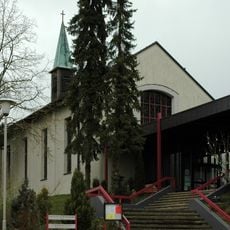
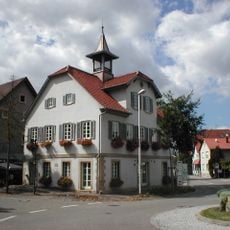
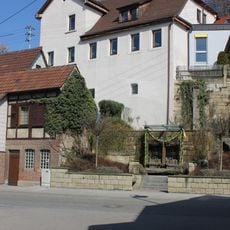
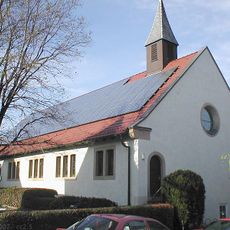
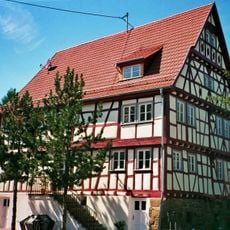
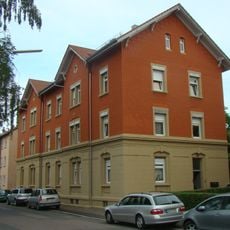
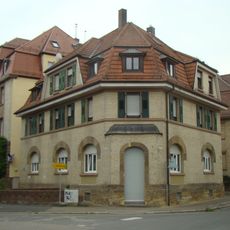
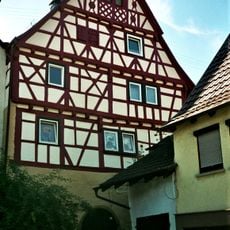
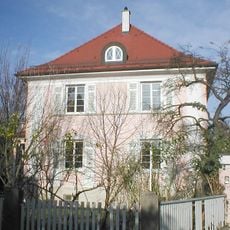
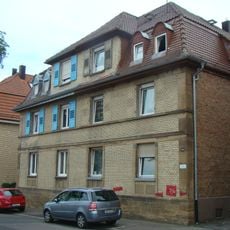
Heilbronner Sandstone, Sandstone quarry in Baden-Württemberg, Germany.
Heilbronner Sandstone is a natural stone in shades of brown and yellow that is quarried in Baden-Württemberg. It can be processed into blocks, slabs, or tiles and works well for construction and building projects.
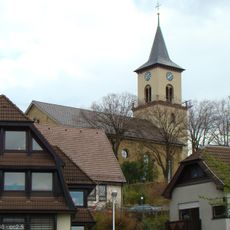
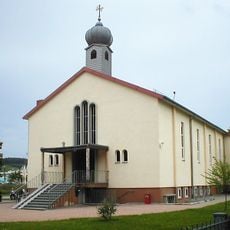
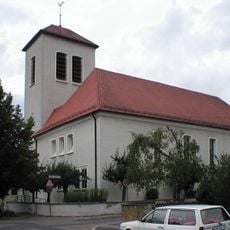
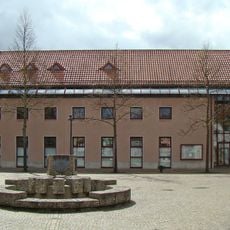
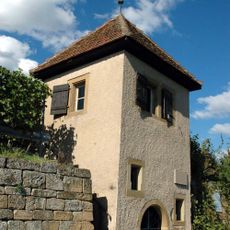
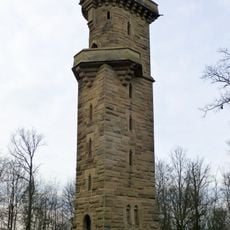
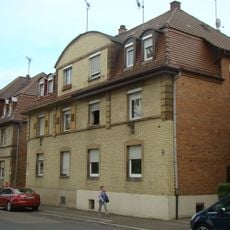
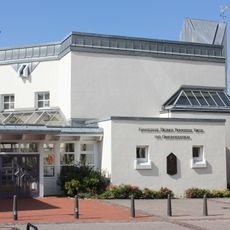
Quarrying of this stone has been happening for several centuries and it became an important material for buildings across Germany. Many houses and churches still use it in their foundations and facades today.
The stone's name comes from Heilbronn, where it was quarried and used in the town hall, the Kilianskirche and the main railway station. Sculptors value it for its easy workability, and examples of their work can be seen on the Heidelberg Castle and the Cologne Cathedral.
Because of its clay-iron binder, Heilbronner Sandstone resists weathering poorly: it sands off, flakes and scales. Its mica lies horizontally, so the stone splits very easily in that direction, and blocks set perpendicular to the bedding can shed large surface plates. It is nonetheless easy to carve, which stone sculptors value.
The Heilbronner Sandstone contains about 30% quartz, 57% rock fragments, 12% alkali feldspar and 1% plagioclase, with a grain size of 0.14 mm. Its brown speckling comes from limonite enrichment. Because the muscovite is aligned horizontally, the stone splits very easily in that direction.
The community of curious travelers
AroundUs brings together thousands of curated places, local tips, and hidden gems, enriched daily by 94,655 contributors worldwide.