Kloster Scheda, Medieval monastery in Wickede, Germany
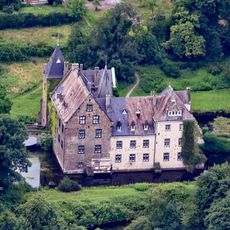
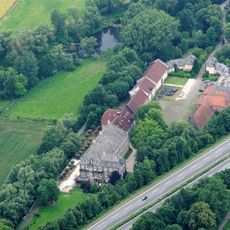
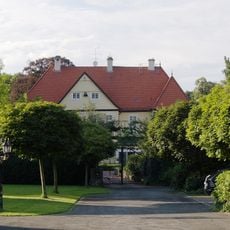
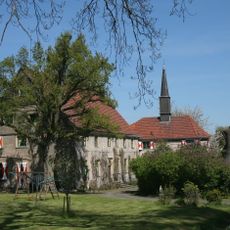
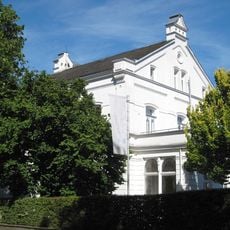
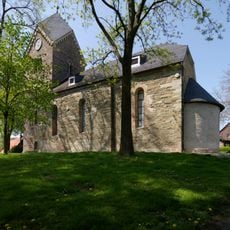
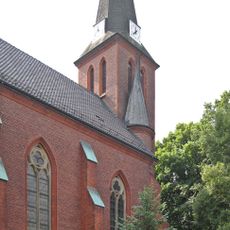
Kloster Scheda is a former Premonstratensian monastery in the Wiehagen district of Wickede (Ruhr), founded in 1143. After secularisation in 1809 it was converted into a farm estate, Gut Scheda. Most buildings were demolished after 1817; the estate's manor house was built in 1861–62 by architect Ferdinand Zangerl, and only the Mönchsgang passage still recalls the monastery.
Founded in 1143 by Wiltrudis and her son Rathard of the Rüdenberger-Ardey family, the monastery was settled by canons from Cappenberg and was initially probably a double monastery. A new church was consecrated in 1173. In the late Middle Ages it became a noble collegiate foundation, and after secularization in 1809 it was converted into a domain; most buildings were demolished after 1817.
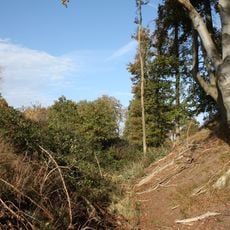
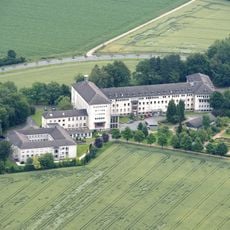
The name Scheda passed to the estate, Gut Scheda, after the 1809 dissolution; the site is now a farm of 120 hectares leased to regional farmers. A monks' walkway (Mönchsgang) on the grounds is the only surviving reminder of the monastery. Legend links the site by a long underground passage to the motte of Burg Hünenknüfer, about 500 m away.
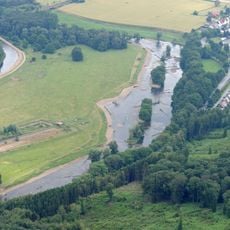
The estate lies in the Wiehagen district of Wickede (Ruhr), about 500 m from the Hünenknüfer motte. The grounds are now a 120-hectare farm leased to local farmers, so fields and buildings are working land; the Mönchsgang is the surviving trace of the monastery. Access is on foot from the surrounding area.
About 500 metres from the former monastery stands the motte of Burg Hünenknüfer; legend holds that a long underground passage once linked it with Scheda. The site also keeps the name Mönchsgang, the monks' walk, as the last reminder of the monastery on the estate grounds.
The community of curious travelers
AroundUs brings together thousands of curated places, local tips, and hidden gems, enriched daily by 93,973 contributors worldwide.