Hesperidengärten, Baroque garden park in Nuremberg, Germany
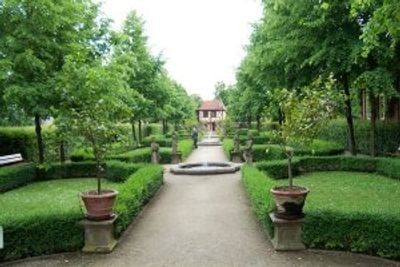
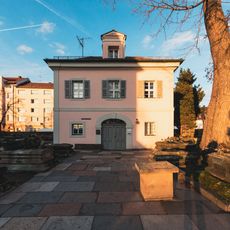
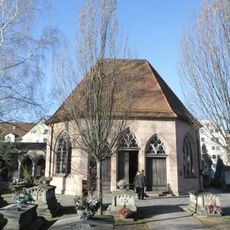
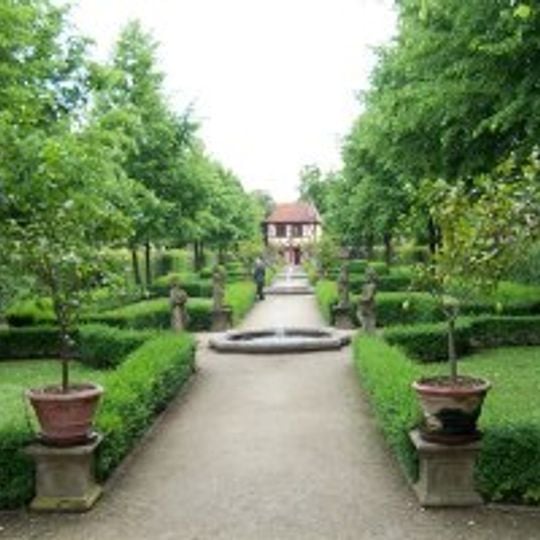
Hesperidengärten is a group of narrow, rectangular Baroque gardens in Nuremberg's St. Johannis district, laid out north–south toward Johannisstraße and enclosed by former summer houses. A gravel path with low clipped hedges leads past terracotta pots on stone bases, rows of small stone statues on pedestals, and a low circular stone basin toward a single-story building with pale walls and a red-brown pitched roof.
Gardens were already laid out in St. Johannis in the 14th century. After the First Margrave War ended in 1449, the city provided replacement plots outside the walls, and from the 16th to 18th centuries patrician and merchant families created show gardens in Renaissance and Baroque style. Citrus, especially bitter oranges, was cultivated in about 70 percent of the gardens in the Burgfrieden.
The name comes from the Greek Hesperides, nymphs who guarded golden apples; in the early modern period these apples were identified with citrus fruit. The merchant and botanist Johann Christoph Volkamer, whose two-volume 'Nürnbergische Hesperides' appeared in 1708–1714, transferred the myth onto Nuremberg's burgher gardens. His book was the first systematic description of the genus Citrus.
Entry is from Johannisstraße between house numbers 43 and 47, and opening hours vary by season. Visitors should check current opening times beforehand and wear sturdy footwear for the various pathways and elevation changes.
Johann Christoph Volkamer recorded these gardens in his two-volume botanical work 'Nürnbergische Hesperides,' documenting the citrus varieties grown during the 18th century. This historical record makes the gardens an important testimony to the region's horticultural past.
The community of curious travelers
AroundUs brings together thousands of curated places, local tips, and hidden gems, enriched daily by 93,194 contributors worldwide.