Hochbunker Lazarettstraße Münster, Air raid shelter in Münster, Germany
Hochbunker Lazarettstraße Münster is a concrete structure featuring medieval fortress-like characteristics with a surrounding dry moat and access bridge. The interior contains multiple rooms including machinery spaces and washrooms that retain original door signs from its operational period.
Built from 1941 to 1943, the bunker was the second of 15 planned large bunkers in Münster. It was designed for 548 people, but regular occupancy reached about 1,200, and up to five times the planned capacity is documented for individual air raids. After the war, the British military government used it temporarily as a map depot.
The structure shows how the city protected itself during wartime through its fortress-like design. This form blends intentionally with Münster's traditional architectural surroundings.
The bunker is owned by the city of Münster and is not open to the public, so the interior cannot be visited. It stands on Lazarettstraße close to the Promenade, the former city fortification, where other old defensive works remain. The dry moat with its access bridge and the trees inside it can be seen from the surrounding paths.
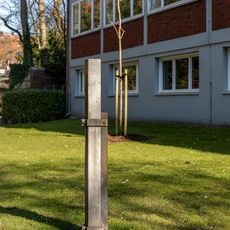
The engineered dry moat now shelters three protected trees: two plane trees and a horse chestnut, transforming a military structure into an unexpected habitat. This accidental greening shows how nature gradually reclaims spaces built for war.
The community of curious travelers
AroundUs brings together thousands of curated places, local tips, and hidden gems, enriched daily by 93,889 contributors worldwide.