Herlingsburg, Archaeological site in Schieder-Schwalenberg and Lügde, Germany
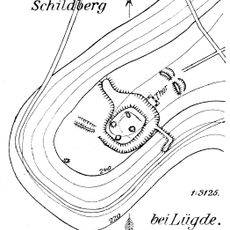
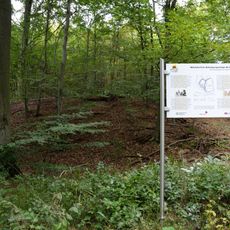
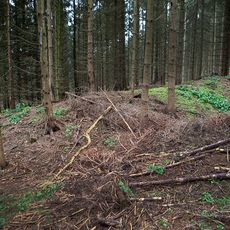
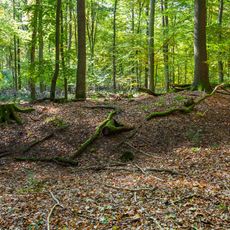
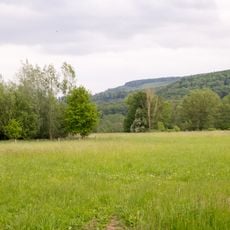
Herlingsburg is an archaeological site on a mountain plateau surrounded by defensive walls that reach several meters high, with a main gateway on the northern side. The fortification covers a substantial land area across two municipalities.
The site was first occupied during the Late La Tène period and remained in use through the Roman Imperial era. It was reoccupied during the Early Medieval period and gradually abandoned by the 10th century.
The name Herlingsburg may derive from the Cherusci, a Germanic tribe settled here around the turn of the era, though this remains speculative. From 1713 the long-unused rampart separated the principalities of Waldeck-Pyrmont and Lippe.
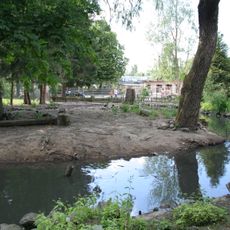
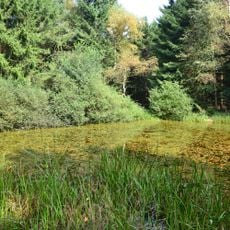
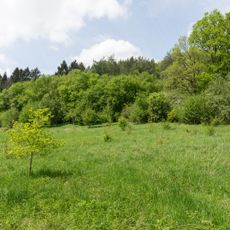
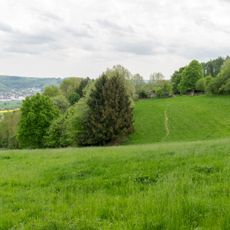
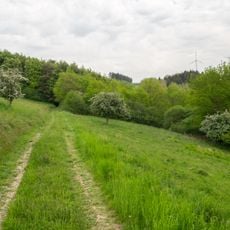
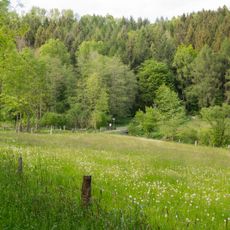
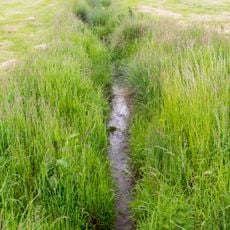
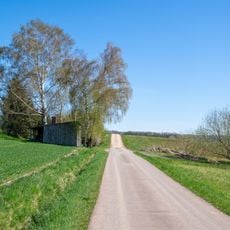
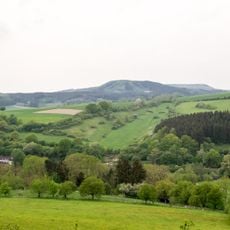
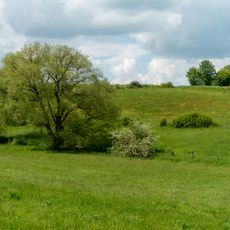
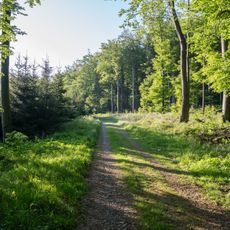
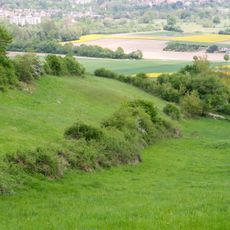
The rampart ring is reached on foot; the only gate faces north and is shielded by outworks and terraces running downhill. The southern slope, terraced and edged by a low outwork, served as pasture and holds several spring hollows. The site lies on the 345 m Keuperberg plateau above Eschenbruch and Glashütte, owned by the Landesverband Lippe and managed by the Schieder forestry office.
The name element "Herling-" has been speculatively linked to the Cherusci, a Germanic tribe settled here around the turn of the era. From 1713 the long-unused rampart separated the principalities of Waldeck-Pyrmont and Lippe.
The community of curious travelers
AroundUs brings together thousands of curated places, local tips, and hidden gems, enriched daily by 93,647 contributors worldwide.