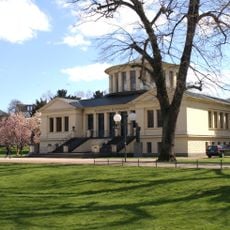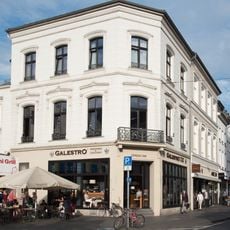
Hofgarten, Park and architectural monument in Bonn, Germany
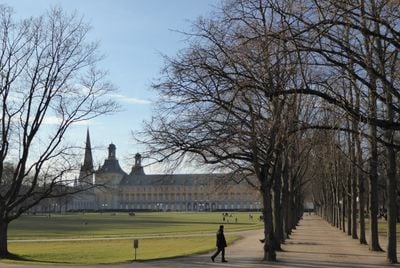
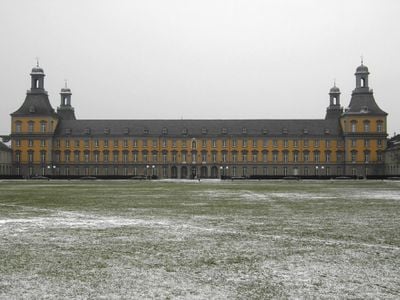
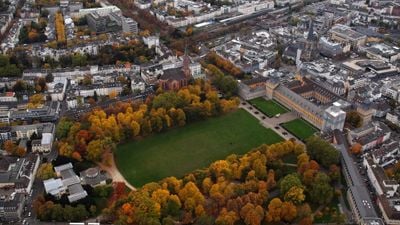
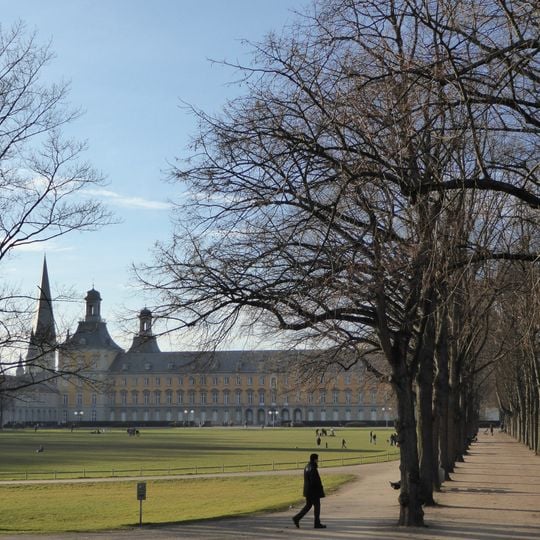
The Hofgarten is a park in Bonn bordering the main university building, the Kurfürstliche Schloss, to the northwest. Its central feature is a large open lawn crossed by pale gravel paths, with a low metal railing along the far side. Behind the lawn stands a long, symmetrical pale yellow stone building with evenly spaced windows, a dark grey roof, and two dark domed towers.
The garden originated in the mid-18th century as part of the Electoral Palace grounds, designed according to French landscaping principles with terraces and lime tree avenues. In the years following World War II, the meadow served a temporary function as a processing site for released prisoners.
The park takes its name from the Kurfürstliche Schloss, the electoral palace that borders it to the northwest and now houses the University of Bonn. Since the 1980s the Hofgarten has hosted student rallies, university events such as graduation ceremonies, and occasional large gatherings, including the opening Mass of the 20th World Youth Day.
The Hofgarten lies between Bonn's inner city and the Südstadt, with the university's main building, the Kurfürstliche Schloss, on its northwest edge. A public underground car park, the Unigarage, opened beneath the lawn on 1 November 1969. Since December 1984 the university has barred large-scale events on the grounds, so it stays a walking and meeting space rather than a venue.
Between 1945 and 1947, the meadow served as a temporary camp where released prisoners of war received support for their return to civilian life. This chapter of its past is barely visible today, yet it marked a turning point in how the space was used and perceived.
The community of curious travelers
AroundUs brings together thousands of curated places, local tips, and hidden gems, enriched daily by 93,327 contributors worldwide.