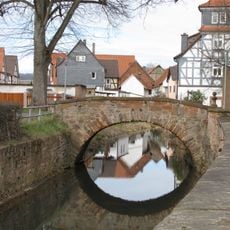
Hofgut Leustadt, Medieval estate in Glauburg, Germany
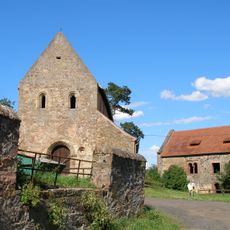
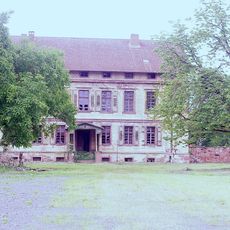
Hofgut Leustadt is a former moated castle in Glauburg-Stockheim, its grounds covering about 45 hectares, of which 7,000 square metres are paved with basalt. Nine historic buildings stand on the site. The L-shaped main building has a three-storey central section with a round stair tower capped by a slate-covered hood, half-timbered side wings and gables, and a small natural-stone house with a stepped hipped roof closing the courtyard.
Leustadt was first documented in 780, when the estate, then called Louphstete, was granted to Fulda Abbey. In 1454 it was recorded as Laustadt with a hunting lodge, held by the Lords of Wolfskehlen. The Thirty Years' War of 1618–1648 brought devastation and plague; the moated castle fell into ruin and was rebuilt around 1690. French soldiers destroyed house and farm in 1796.
The name comes from medieval German and refers to an estate built in open countryside. Today visitors can explore how the buildings were organized to function as a working farm and residence for a noble family.
The property sits at about 139 meters elevation in a rural setting and is relatively straightforward to reach. It is best to explore the complex on foot to properly see all nine buildings at your own pace.
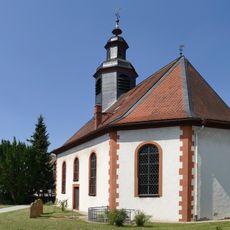
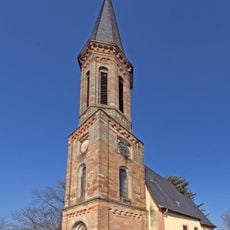
From 1743 to 1753 the estate and its chapel housed a small colony of the Moravian Brethren who had lost their quarters on the Herrnhaag near Büdingen. The cabinetmaker Abraham Roentgen lived and worked in the manor during this period, and his son David Roentgen, later a celebrated furniture maker, was born here in 1743.
The community of curious travelers
AroundUs brings together thousands of curated places, local tips, and hidden gems, enriched daily by 93,180 contributors worldwide.