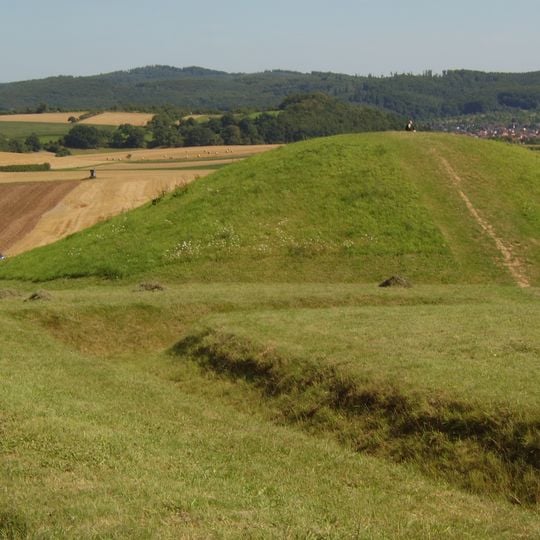
Glauberg, Archaeological site in Hesse, Germany
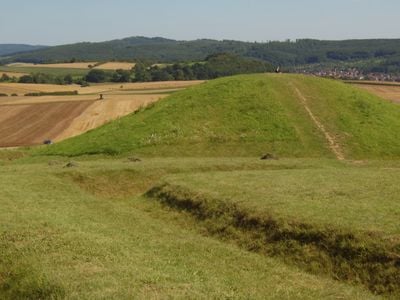
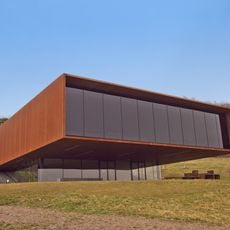
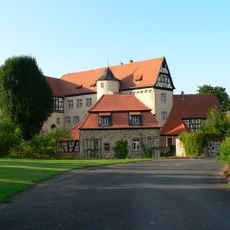
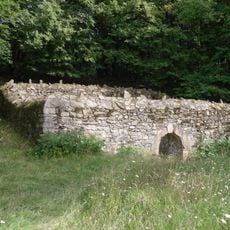
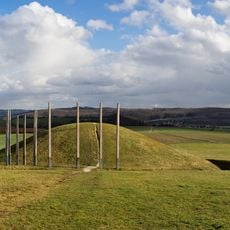
Glauberg is a 276.5 m basalt hill in Hesse with a flat plateau about 800 m long and 80–200 m wide. Its slopes are steep on three sides, and a reconstructed burial mound and the Keltenwelt museum stand on the southern flank. The plateau holds a small pond and the ruin of Glauburg Castle with a Romanesque arched doorway.
The plateau was settled in the Neolithic around 4500 BC and again in the late Bronze Age (10th–9th century BC). In the 6th–5th century BC it became a Celtic princely seat with extensive ramparts and a water reservoir. A Frankish fort followed in the 7th–9th century, and a Staufer castle was destroyed in 1256.
The name Glauberg comes from the Glauburg family, Frankfurt patricians who held their ancestral seat in the medieval castle on the plateau. The hill's most famous find, the 1.86 m red sandstone statue of the Celtic prince, was recovered on 24 June 1996 and is displayed in the Keltenwelt museum opened in 2011. Full-size copies stand in the local museum in Glauburg and in the Wetterau Museum in Friedberg.
The plateau is reached on foot from the Keltenwelt am Glauberg museum on the southern slope, which opened in 2011 and displays the 1.86 m sandstone warrior statue found in 1996. The climb gains about 150 m; the grass path up the mound is narrow and can be slick after rain. The reconstructed burial mound and the Romanesque arched doorway of the castle ruin at the northeast high point are the main points to find.
The site is known for containing unusually many statues and reliefs of Celtic warriors in its graves, which is rarely found at other sites from this period. These artworks provide insight into how power and identity were portrayed in Celtic society of that era.
The community of curious travelers
AroundUs brings together thousands of curated places, local tips, and hidden gems, enriched daily by 93,042 contributors worldwide.