Schloss Rossewitz, Manor house in Laage, Germany.
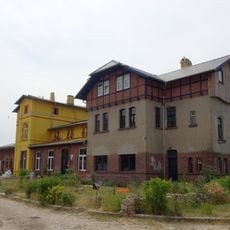
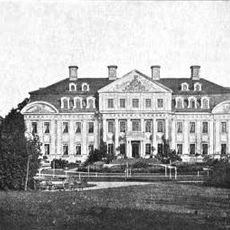
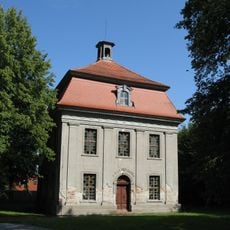
Schloss Rossewitz is a brick manor house in the countryside near Laage, in Mecklenburg-Vorpommern, listed as an architectural heritage monument. The building stands several stories tall with large window openings, and its facade shows the effects of decades of weathering and vacancy.
A medieval castle of the Nortman family stood here until it was destroyed in the Thirty Years' War. In 1655 Joachim Heinrich von Vieregge had Charles Philippe Dieussart build a new manor on its foundations, completed around 1680. After the Vieregge fortune declined around 1760, the ducal chamber took over the estate, and Friedrich Franz I later stayed here and saw to its upkeep. After 1945 it sheltered refugees, then stood empty; the roof collapsed in 1982 and again in 1991/92.
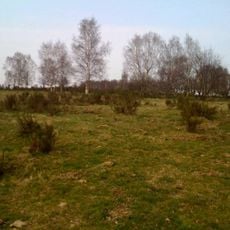
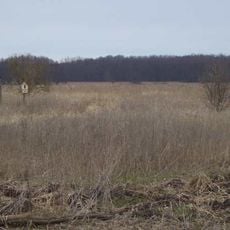
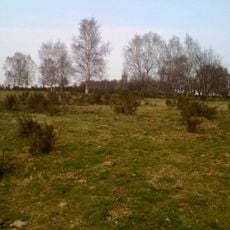
The name Rossewitz traces back to a Slavic place name, a reminder of the region's history before German settlement. The building stands in open farmland, showing how closely estates like this one were tied to rural working life around them.
The building is fenced off and cannot be entered; the walls are 1.43 m thick at the base and 1.08 m at the top. The roof collapsed in 1982 and again in 1991/92, and restoration has been ongoing since 1993. Visitors can walk around the outside to see the facade and the surrounding fields.
In 1973 the manor served as a film set for the DEFA adaptation of Goethe's "Elective Affinities", and the wall paintings were provisionally conserved for the shoot. The building's survival is credited to its exceptionally thick walls, 1.43 m at the base and 1.08 m above.
The community of curious travelers
AroundUs brings together thousands of curated places, local tips, and hidden gems, enriched daily by 94,528 contributors worldwide.