Horst Wessel monument in Lower Saxony, Memorial monument in Süntel, Germany
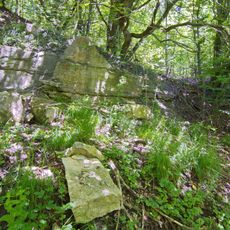
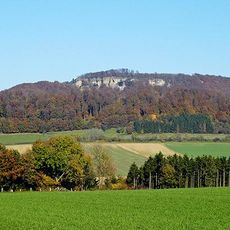
The Horst Wessel monument is a ruin in the Süntel, about 700 metres north of Welliehausen at roughly 370 metres above sea level. Its remains consist of foundation and pedestal parts and two six-metre-long pieces of a stone column that once measured 1.60 by 1.60 by 12 metres, built from natural stone with concrete and internal steel reinforcement. The column stood on a cleared square with room for over a thousand people, now overgrown with vegetation.
Planned from 1933 at the initiative of SA chief of staff Viktor Lutze, the district of Hameln-Pyrmont and the city of Hameln, the memorial was built by 1938 above former quarries at about 370 m. It was inaugurated on 26 February 1939. US units blew it up on 20 April 1945, Hitler's birthday, leaving only foundation and column fragments.
The site is the only surviving remnant of any Horst Wessel monument; the Bielefeld and Mainz memorials are gone. Its name recalls the SA-Sturmführer killed in Berlin in 1930, whom the Nazi regime promoted as a martyr from 1933. On 23 February 2010, about 20 neo-Nazis marched here from Welliehausen with torches and flags; two young adults filming the march from a car were attacked.
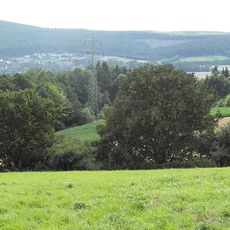
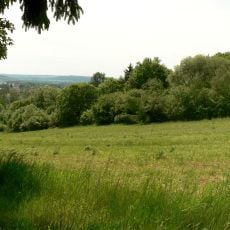
The ruins lie in the Süntel, about 700 metres north of Welliehausen, a district of Hameln, at roughly 370 metres above sea level. A hiking trail passes the overgrown former parade ground, but there is no on-site information about the stone remains. An information board about the history stands at a nearby former quarry.
The monument established a direct line of sight to the location where the Reich Harvest Thanksgiving Festival took place between 1933 and 1937.
The community of curious travelers
AroundUs brings together thousands of curated places, local tips, and hidden gems, enriched daily by 94,497 contributors worldwide.