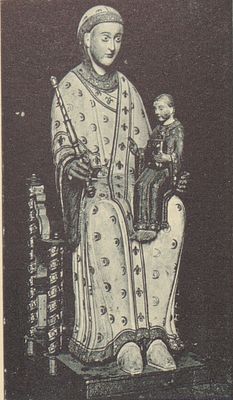
Imad-Madonna, Medieval sculpture in Paderborn, Germany
Imad-Madonna is a 112 cm (44 in) tall wooden sculpture in the Ottonian style, depicting Mary seated on a throne-like arrangement with the Christ Child. The work shows the carved surface details characteristic of 11th-century craftsmanship, with traces of its original paint still visible.
The sculpture was created around 1050, during a period when Paderborn served as an important religious center in the early German empire. It emerged in an era when the city's bishops wielded significant influence over the region's political and cultural direction.
This work shows how medieval believers venerated Mary and what role religious art played in their spiritual practice. The depiction of mother and child was a central image that would have guided worshippers through their prayers.
The sculpture is housed in the Diözesanmuseum Paderborn and can be viewed during the museum's regular hours. It is advisable to allow time to examine the fine carving details and traces of original paint from close up.
The work was originally painted and gilded entirely, which would completely transform its appearance today if those layers had survived. The few color traces visible now give only a faint impression of the original brightness and visual impact it had on viewers.
The community of curious travelers
AroundUs brings together thousands of curated places, local tips, and hidden gems, enriched daily by 92,599 contributors worldwide.