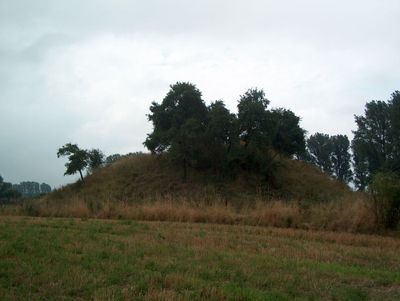
Motte Altenburg, Medieval castle ruins in Jülich, Germany.
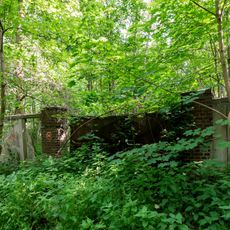
Motte Altenburg is a medieval motte-and-bailey castle site in Jülich, of which only the tree-covered earthen mound, about 85 metres in diameter, and the remains of its moat survive. Excavations in 1896 uncovered a well lined with tuff in the centre of the mound, and low wall remnants suggest a stone perimeter wall partly built from Roman bricks. The rectangular bailey, about 20 by 50 metres, is still faintly visible in the terrain.
The motte was probably built in the 12th century to strengthen the County of Jülich's defences against the Archbishopric of Cologne and to secure the Rur line alongside the late Roman fort in Jülich. It was likely destroyed in the 13th century, perhaps in 1239 or with the devastation of Jülich in 1278, and not rebuilt after the Battle of Worringen in 1288.
The name Altenburg passed from the vanished castle to the village that outlasted it; whether the settlement predated the motte or grew in its shelter is uncertain. The hill is now a protected archaeological monument, listed as Bodendenkmal No. 19 by the city of Jülich.
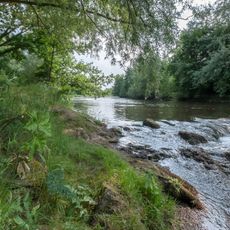
The site sits near the Rur River and is easily reached on foot from Jülich town center. Access is free and open year-round, though sturdy shoes are recommended due to uneven ground.
Excavations in 1896 uncovered a well lined with tuff in the centre of the mound. The main castle also had a stone perimeter wall partly built from reused Roman bricks, and until the late 19th century the foundations of two round stone towers could still be seen at the corners of the bailey.
The community of curious travelers
AroundUs brings together thousands of curated places, local tips, and hidden gems, enriched daily by 93,897 contributors worldwide.