Johann-Friedrich-Danneil-Museum, Local history museum in Salzwedel, Germany.
The Johann-Friedrich-Danneil-Museum is a local history museum in Salzwedel that spans multiple exhibition areas displaying artifacts documenting the development of the city and Altmark region. The spaces present evidence of human settlement, craftsmanship, and community life across different periods.
Founded in 1836 as the collection of the Altmärkischer Verein für vaterländische Geschichte und Industrie, in which Johann Friedrich Danneil played a leading role, it was one of Germany's first association museums. Its holdings moved from the Salzwedel town hall to a side chapel of the Marienkirche and then to the district court; Wilhelm I and Bismarck viewed the collection in 1865. In 1929 it moved into the Propstei and was reopened under its present name on 28 September 1932.
The Salzwedeler Madonna, an oak sculpture carved around 1225/1230, and the Weinbergaltar of 1582 from the workshop of Lucas Cranach the Younger are the best-known pieces. The altar's central panel shows the parable of the workers in the vineyard as an allegory of the Reformation; it originally stood in Salzwedel's Mönchskirche.
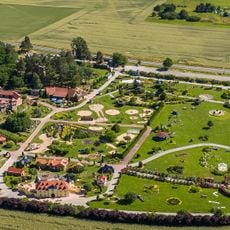
The museum occupies the Propstei, the former provost's residence directly south of the Marienkirche, so the two can be visited together. The building is a Renaissance timber-framed house with a stair tower and a sandstone portal added in 1754. The Langobardenwerkstatt Zethlingen, an educational branch at a roughly 2,000-year-old cremation cemetery, belongs to the museum as well.
The museum houses a research library with extensive holdings focused on regional history that goes far beyond what is displayed in the exhibition rooms. For those interested in deeper historical research, this collection provides an opportunity to explore original sources and documents of the area.
The community of curious travelers
AroundUs brings together thousands of curated places, local tips, and hidden gems, enriched daily by 94,646 contributors worldwide.