Jüdisches Museum Rendsburg, Jewish museum in Rendsburg, Germany.
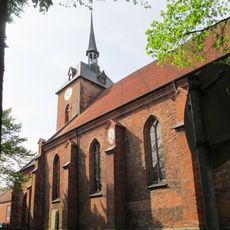
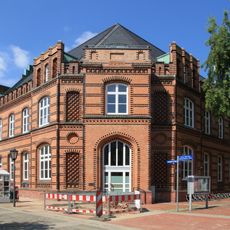
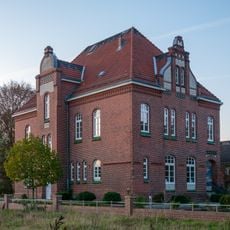
The Jewish Museum Rendsburg occupies the fully preserved community centre of the former Jewish community, comprising the former synagogue with its mikveh and women's gallery, and the former Talmud Torah school. Since 1991 two adjoining buildings around the courtyard have housed temporary exhibitions. The complex has been called Dr.-Bamberger-Haus since 1985, after the physician Ernst Bamberger, persecuted as a Jew under National Socialism.
Rendsburg's Jewish community dates from 1692, when Danish King Christian V opened the new Neuwerk district to religious minorities. The community centre with synagogue, mikveh and Talmud Torah school was later misused as a fish smokehouse and warehouse. Listed as a monument in 1981 and bought by the city a year later, it was restored by 1985; the synagogue, architect Horst Krug and the city received the Europa Nostra Medal in 1986. The museum opened on 6 November 1988.
The museum's name honours Dr. Ernst Bamberger, a physician persecuted as a Jew under the Nazis and driven to suicide. Since shortly after opening, the "Novembertage" series has become a regional institution, with readings, theatre, films and concerts that inspired other Jewish meeting places.
The museum occupies the former community centre on the edge of Rendsburg's Neuwerk district, where the Jewish community settled from 1692. The synagogue, women's gallery, mikveh and former Talmud Torah school form one connected complex, with two courtyard buildings added in 1991 for temporary exhibitions. The adjacent Jewish cemetery in Westerrönfeld, laid out in 1695, is partly preserved and can be visited.
The building was used as a fish smokehouse and warehouse before the city bought it in 1982. In 1986 the former synagogue, restoration architect Horst Krug and the city received the Europa Nostra Medal for monument care.
The community of curious travelers
AroundUs brings together thousands of curated places, local tips, and hidden gems, enriched daily by 93,953 contributors worldwide.