Raitenhaslach Cistercian Abbey, Cistercian monastery in Burghausen, Germany
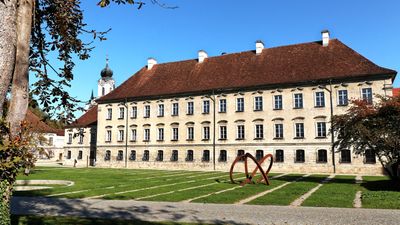
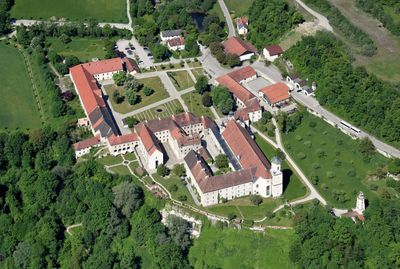
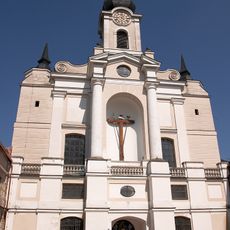
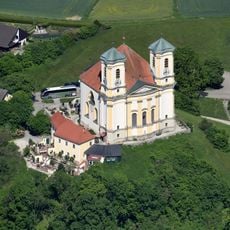
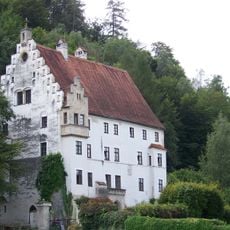
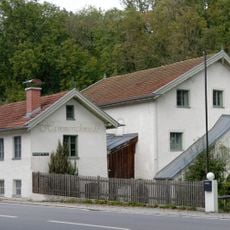
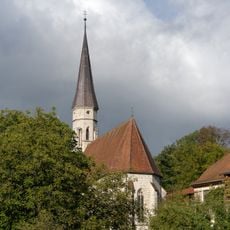
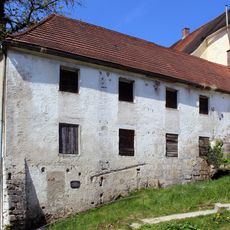
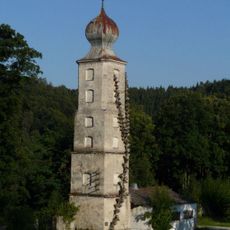
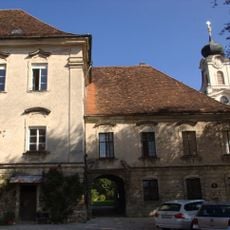
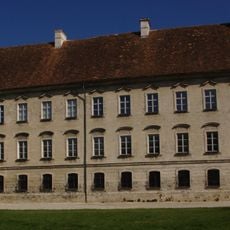
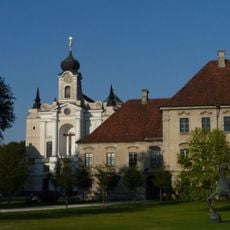
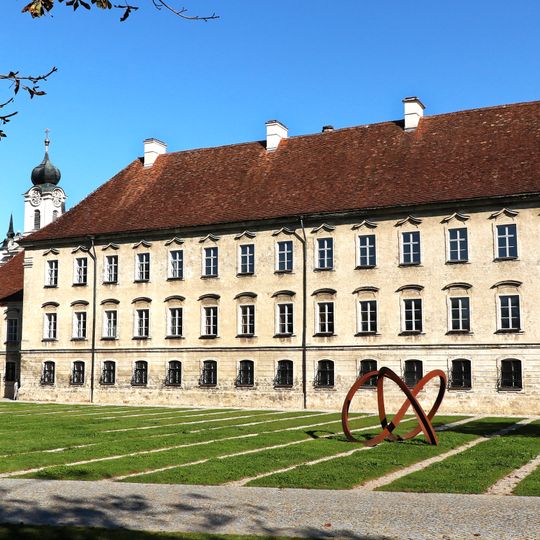
Raitenhaslach Cistercian Abbey is a monastery complex on the bank of the Salzach River near Burghausen in Bavaria, made up of several baroque buildings, the Church of Saint George, and a 16th-century water tower. The layout follows the classic plan of a working monastery, with a church at its center and residential and service buildings arranged around it.
The abbey was founded in 1143 by Count Wolfker de Tegerwac and his wife Hemma, and it remained an active Cistercian house for over six centuries. Secularization in 1803 ended monastic life there, and many buildings were torn down before the surviving structures were eventually restored.
The ceiling of the church is painted with frescoes by Johannes Zick showing the life of Saint Bernard, covering three large ceiling bays in sequence. Visitors who look up as they walk through the nave can follow the story as it unfolds from one bay to the next.
The complex sits along the Salzach riverbank and is easy to reach on foot, though some paths between buildings can be uneven, so comfortable shoes are a good idea. Several areas are open to visitors, and taking a slow walk around the whole site gives a better sense of its scale.
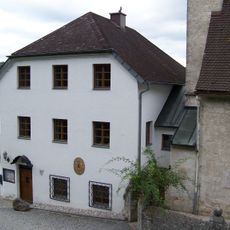
One of the surviving rooms hosted Pope Pius VI in 1782 during his journey to Vienna, and it is still known today as the Pope's Room. A visit from the head of the Catholic Church to such a remote monastery was rare enough to leave a lasting mark on how the space is remembered.
The community of curious travelers
AroundUs brings together thousands of curated places, local tips, and hidden gems, enriched daily by 90,874 contributors worldwide.