Kulturgeschichte der Panke, Cultural history site in Barnim District, Germany
Kulturgeschichte der Panke documents the historical and cultural development along the river as it flows through Brandenburg and Berlin, spanning about 29 kilometers in total. A significant portion runs through Berlin's districts, with established parks and pathways following its course throughout the city.
The Panke region shows traces of human settlement dating back to the Stone Age, with archaeological evidence of reindeer hunters found near the Karow ponds. The river later became important for settlement development and shaped the surrounding landscape over millennia.
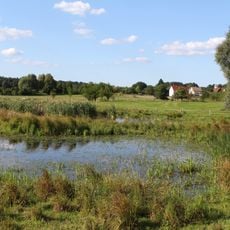
The name Panke comes from Slavic origins meaning swamp or wetland, reflecting the damp character of the valley. Today visitors see reed beds and wetland habitats throughout the area that define its natural landscape.
A hiking trail along the Panke connects several parks including Schlosspark in Buch, Bürgerpark, and Pankepark, offering visitors easy paths to explore. The route passes through different Berlin neighborhoods and is accessible from local parks in each section.
Water mills along the Panke greatly altered the landscape and influenced where villages and farms developed in the region. The industrial use of water left visible traces that remain observable in the valley's structure today.
The community of curious travelers
AroundUs brings together thousands of curated places, local tips, and hidden gems, enriched daily by 91,129 contributors worldwide.