Krankenhaus Moabit, Medical heritage site in Moabit, Berlin, Germany.
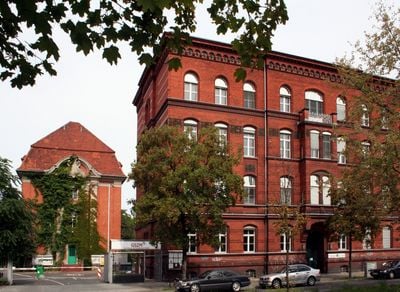
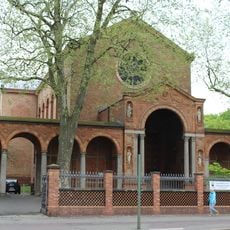
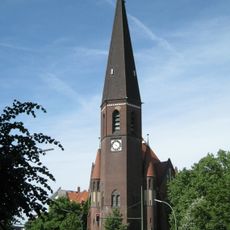
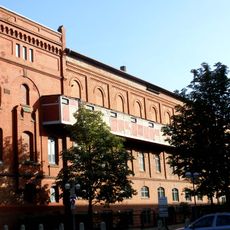
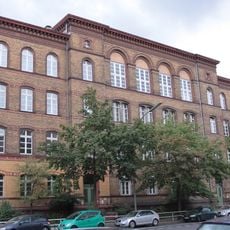
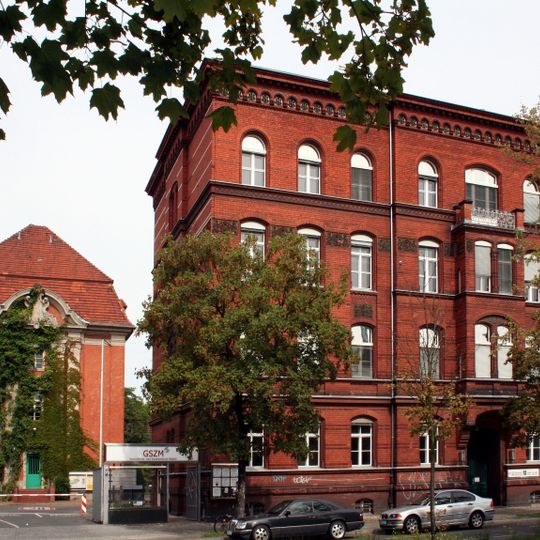
Krankenhaus Moabit is a former hospital in Berlin-Mitte featuring red brick facades and symmetrical building arrangements typical of the late 1800s. The complex displays the characteristic layout of a large medical facility with multiple connected pavilions designed to separate different patient areas and functions.
The hospital was founded in 1872 during a cholera epidemic and grew into a major medical center with research and teaching capabilities by 1920. It served as a training ground for doctors and nurses throughout the 20th century before closing in 2001.
The building shapes the Moabit neighborhood with its imposing brick structure and shows how medical facilities were central to the district's growth. Local residents view this place as part of their community history and as an example of practical medicine in an urban setting during the 1800s.
The building is well-served by public transport in Berlin-Mitte and easy to reach on foot from nearby streets. Note that not all parts of the complex are freely accessible, so it is wise to check current accessibility before planning a visit.
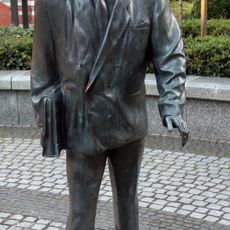
Physician Werner Forssmann performed the first cardiac catheterization experiment in 1929 within this hospital, pioneering a technique that would transform modern cardiology. This achievement later earned him a Nobel Prize, though it was initially controversial among his peers.
The community of curious travelers
AroundUs brings together thousands of curated places, local tips, and hidden gems, enriched daily by 92,307 contributors worldwide.