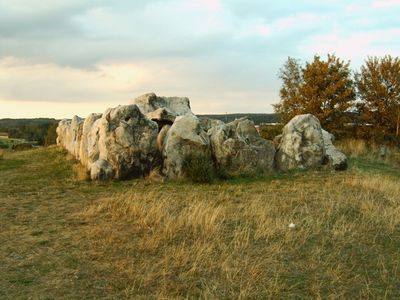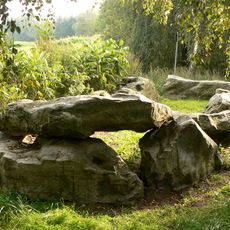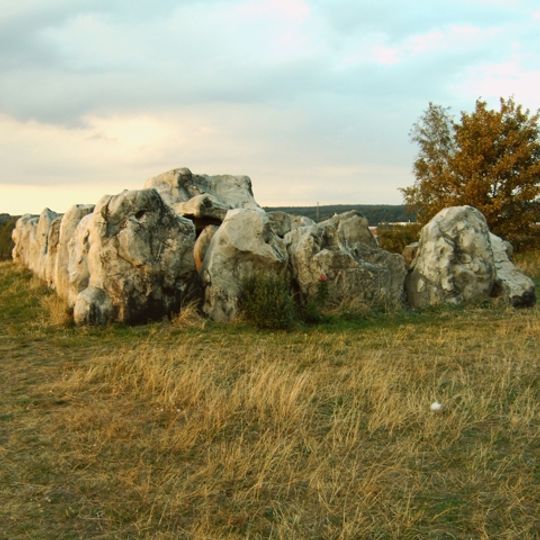
Lübbensteine, Neolithic dolmen in Helmstedt, Germany.
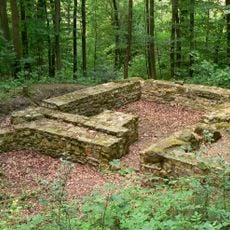
The Lübbensteine is a megalithic structure made of large quartzite stones arranged on Saint Anne's Mountain in Helmstedt to form multiple burial chambers. The stones are naturally shaped and were assembled by prehistoric people for burial purposes.
These burial chambers were built between 3500 and 3000 BCE when farming peoples of the Funnel Beaker culture settled in this region. The society used such sites as collective burial places across many generations.
The name Lübbensteine refers to the stones themselves, which have remained in local memory for thousands of years. Visitors today can experience this stone arrangement as a historical witness to an early community that buried their dead in a special place.
The site sits on a mountainside and requires sturdy footwear and decent fitness to explore. Visitors should expect uneven ground and the location is not wheelchair accessible.
An old folktale tells of a wandering giant who accidentally dropped the stones through a hole in his pocket. This story shows how the site has shaped the imagination and storytelling of local people since ancient times.
The community of curious travelers
AroundUs brings together thousands of curated places, local tips, and hidden gems, enriched daily by 92,623 contributors worldwide.