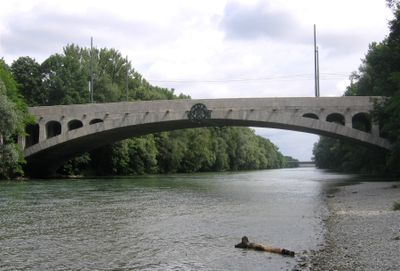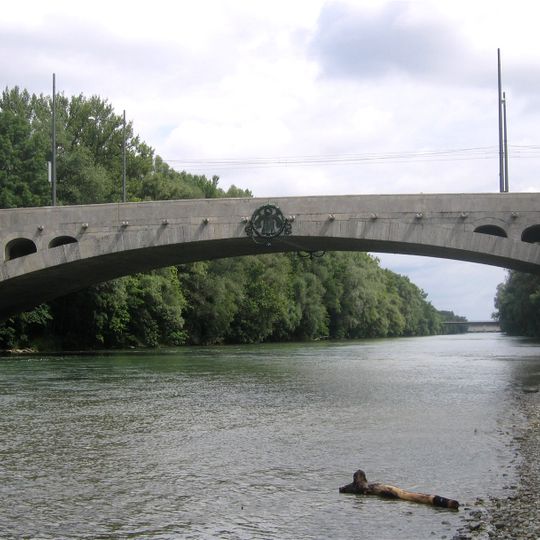
Max-Joseph Bridge, Art Nouveau stone bridge in Munich, Germany.
The Max-Joseph Bridge is a stone bridge in Art Nouveau style that spans the Isar River and connects two districts of Munich. The structure measures about 138 meters long and is defined by a main arch with a span of about 46 meters.
Architect Theodor Fischer designed this stone bridge in 1902 to replace a wooden structure destroyed by floods in 1804. The project aimed to provide a lasting solution for crossing the river at this location.
Four stone sculptures on the bridge show natural elements through figures representing air, water, fire, and earth created by different German artists. These works shape how the bridge looks and feels when you cross it.
The bridge is easily accessible on foot with good crossing points for pedestrians on both sides. Parking and public transit are available nearby to visit the bridge and surrounding areas.
The bridge survived World War II without damage and preserves its original Art Nouveau details from 1902. This survival makes it a rare example of undamaged architecture from this period in the city.
The community of curious travelers
AroundUs brings together thousands of curated places, local tips, and hidden gems, enriched daily by 92,800 contributors worldwide.