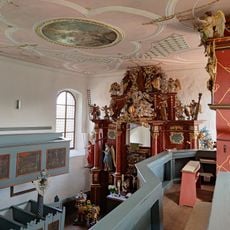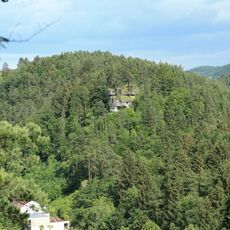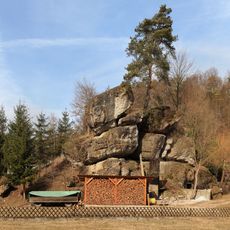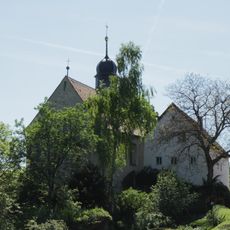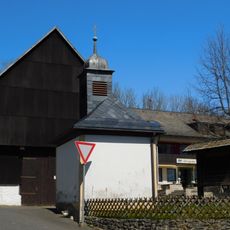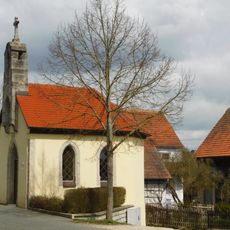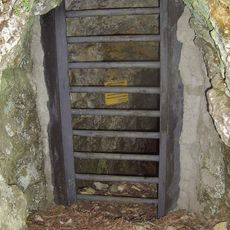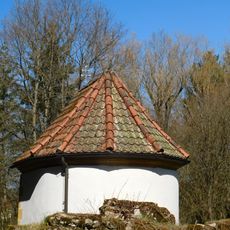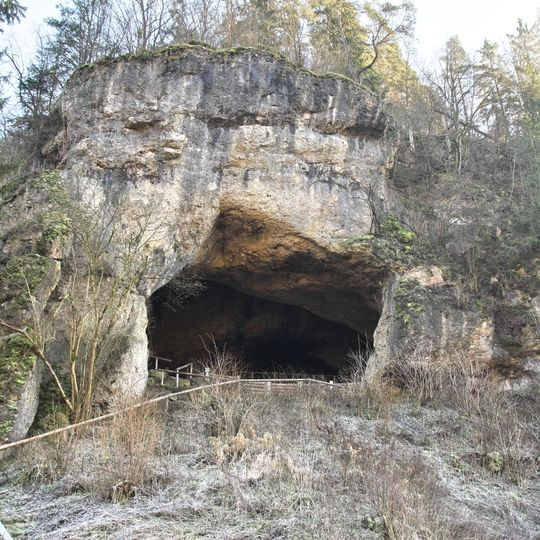
Ludwigshöhle, Natural karst cave in Ahorntal, Germany.
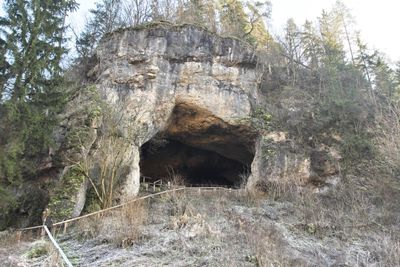
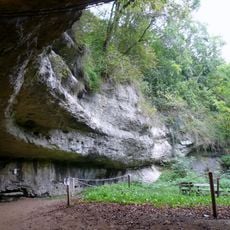
Ludwigshöhle is a natural karst cave in Ahorntal with a spacious entrance approximately 15 meters wide and 11 meters high. A large main chamber extends about 28 meters deep into the hillside.
The cave formed during the Cretaceous period through karstification, creating passages filled with dark sediment deposits from ancient animals. Scientist William Buckland explored and documented its geological features in 1816 and 1822.
The cave bears the name of King Ludwig I, who held a grand feast here in 1830 and replaced its former names Kühloch and Rabenloch. This royal event became central to the place's local identity.
The entrance is located near a parking area and remains accessible throughout the year. Visitors should bring their own lighting to explore the interior safely.
The interior contains black earth deposits from Pleistocene wildlife that accumulated over thousands of years. These sediments offer clues about the ancient animal life that once inhabited the region.
The community of curious travelers
AroundUs brings together thousands of curated places, local tips, and hidden gems, enriched daily by 91,529 contributors worldwide.