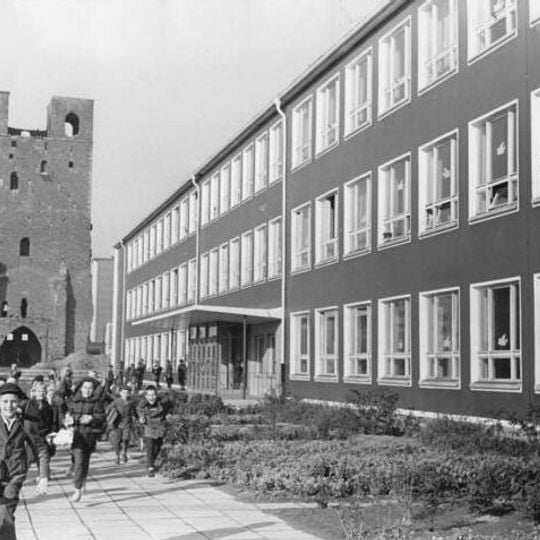
Sankt-Katharinen-Kirche, Medieval church in Altstadt, Magdeburg, Germany.
Sankt-Katharinen-Kirche was a stone building in the Altstadt with a broad main hall designed to hold large congregations and shape the downtown streetscape. The interior provided functional spaces for worship with areas arranged for various liturgical purposes.
The foundation stone was laid in 1230, marking the start of a major church building project in Magdeburg's urban center. In 1524, under Pastor Johann Ziegenhagen, the congregation made the shift to Protestantism, abandoning Catholic practice.
The church was named after Catherine of Alexandria, whose finger relic was brought to Magdeburg by Archbishop Albrecht I and became an object of local devotion. This spiritual connection shaped the community's religious life for generations.
Its location in the city center made the building an important refuge during wartime, with residents and evacuees seeking shelter within its thick stone walls during the heavy bombing of January 1945. The structural solidity provided protection to people caught in this dangerous period.
The building survived more than 700 years of history, including fires and wartime destruction, only to be demolished between 1964 and 1966. This late demolition after such longevity raises questions about postwar reconstruction priorities in Magdeburg.
The community of curious travelers
AroundUs brings together thousands of curated places, local tips, and hidden gems, enriched daily by 91,620 contributors worldwide.