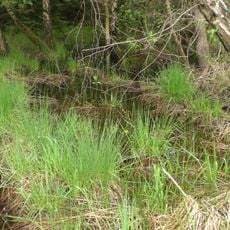
Schloss Jägersburg, 18th-century hunting palace in Homburg, Germany
Schloss Jägersburg was a two-story main building with 15 window axes flanked by single-story side wings that reflected the French Grand Trianon model. The entire complex included residential spaces alongside extensive gardens with formal planting structures and landscaped features.
The palace was built between 1752 and 1756 under Duke Christian IV of Pfalz-Zweibrücken as a symbol of princely power. During the French Revolutionary Wars, the complex was destroyed in 1793 and subsequently vanished from the landscape.
The palace reflected Enlightenment ideas and showed how German princes adapted French elegance for their own courts. The rooms and surrounding gardens told of a life that moved between hunting, ceremony, and artistic ambition.
No building remains are visible at the original site today, but plans and illustrations can be found in regional museums and archives for those interested in its history. Walking through Homburg can help visitors gain a better understanding of the location's former importance.
Garden designer Johann Ludwig Petri created extensive grounds around the hunting residence, which were equipped with Italian fountains and sculptures. These garden designs showed how ambitiously German princes adorned their living spaces with artistic elements.
The community of curious travelers
AroundUs brings together thousands of curated places, local tips, and hidden gems, enriched daily by 91,406 contributors worldwide.

![Wald zwischen L119 im Norden, der Landesgrenze und Kirrberg im [Sued]Osten sowie Homburg im Westen](https://img9.digsty.com/k7FrTBDHFBvjoPV3LZixLQstsNGeeJq7NO0yJ5lwAfc/rs:fill:230:230:1/g:fp:0.5:0.5/czM6Ly9hcm91bmR1cy8xNC8xMTAwMzY5MS05MzFiYzQ2MS5qcGc.jpg)