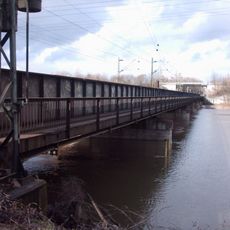
Trerichsweiher / Untere Aggeraue, Nature reserve in Siegburg, Germany.
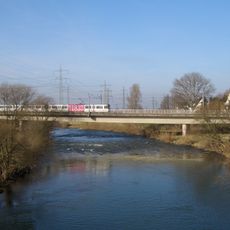
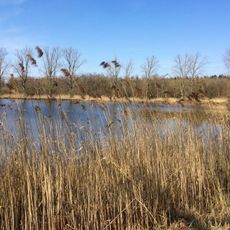
Trerichsweiher and the lower Agger floodplain form a protected reserve with marshes, ponds, meadows and wooded sections along the river. The mix of wet and dry zones creates different habitats for plants and animals within a compact area.
The pond began as a clay pit dug in the 16th century; when extraction stopped, the hollow filled with water and became a four-hectare pond three metres deep. In 2006 the Technisches Hilfswerk ran two 5,000-litre pumps for three hours to aerate the water, and in 2008 a mowing boat of the Wupperverband cut away the surface mat of rigid hornwort. The 25-hectare reserve is registered as SU16, area 165944 in the World Database on Protected Areas.
The pond's name comes from the old field name "Trerich", and the whole area is protected as reserve SU16. In 2006, 95 resident bird species were recorded here, 18 of them on the Red List; visitors can watch greylag, Canada and Egyptian geese, grey and purple herons, great crested grebes, tufted ducks, cormorants and coots. Otters have also been sighted.
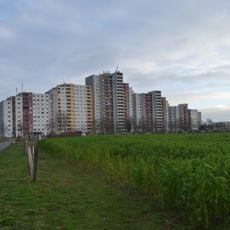
The reserve lies between the Agger, which forms the border with Troisdorf, and the B56, which separates it from the housing. The terrain sits at 55 to 65 metres above sea level. In summer the surface can be covered by a mat of rigid hornwort, so the water is kept open by pumping and mowing.
In 2006, 95 resident bird species were recorded at the pond, 18 of them on the Red List. Among the birds seen are purple herons, gadwalls and great crested grebes, and otters have also been spotted. The pond is a former 16th-century clay pit, four hectares in size and three metres deep.
The community of curious travelers
AroundUs brings together thousands of curated places, local tips, and hidden gems, enriched daily by 94,387 contributors worldwide.