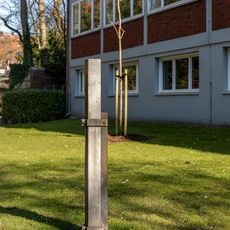
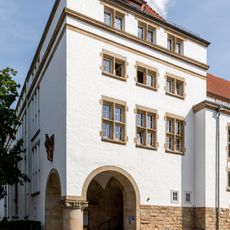
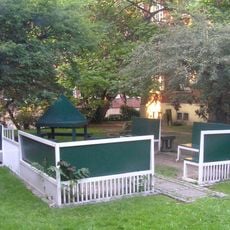
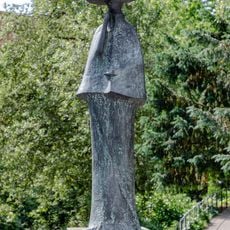
Tuckesburg, Historical building near the old zoo in Münster, Germany
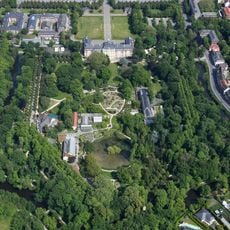
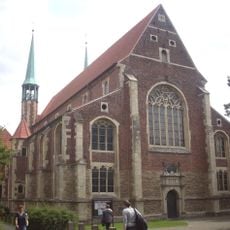
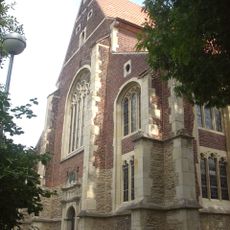
Tuckesburg is a residential building from the late 19th century standing on a small hill where Promenade, Himmelreichallee, and Hüfferstrasse meet. The architecture displays the solid, practical style typical of buildings from that period.
Hermann Landois had the house built in 1892 next to the zoo he founded, and lived there until his death that same year. He tried to prove that the historic Tuckesburg, a hill with a moat used for executions by the sword, had stood on this spot. That site actually lay between the Coesfelder Tor and the Judenschanze and was built over when the citadel was constructed in 1661. The Weyhesche Hügel beneath the house is probably the remnant of a medieval motte.
Hermann Landois, who called himself Count Tucks, lived here with his pet monkey Lehmann next to the zoological garden he established. The connection between this residence and the neighboring zoo continues to shape how locals understand this place in Münster's story.
The house stands on the small Weyhe hill between Promenade, Himmelreichallee and Hüfferstraße, at the edge of the old zoo grounds. It has been used as a dwelling since the city of Münster bought and renovated it in 1967, so it is not open to visitors and can only be seen from the surrounding streets.
Hermann Landois tried to prove that the original Tuckesburg, a fortress and execution site of the Überwasser parish, stood on this hill. In fact, that historic Tuckesburg lay between the Coesfelder Tor and the former Judenschanze, and was demolished in 1661 when the citadel was built.
The community of curious travelers
AroundUs brings together thousands of curated places, local tips, and hidden gems, enriched daily by 94,533 contributors worldwide.