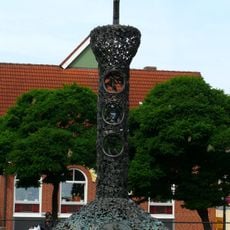
Thousand-year Rose, Rose bush at Hildesheim Cathedral, Germany
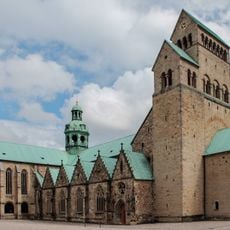
The Thousand-year Rose is a Rosa canina, a dog rose, growing on the eastern apse of Hildesheim Cathedral, which is about 21 m high and 9 m wide. Supported by climbing aids, the bush reaches nearly 10 m, far above the usual 3 m for the species. Its stems bear small, sharp, hooked spines, and its leaves have five to seven leaflets.
The rose has existed since medieval times and witnessed major upheaval during the cathedral's reconstruction. Its root system survived the 1945 bombing intact, allowing new growth to emerge from beneath the rubble as the building was restored.
The rose gave Hildesheim its city emblem, the rose, and is tied to the founding of the cathedral, the bishopric and the town in the 9th century. Legend says Hildesheim prospers as long as the bush flourishes. Its hips are used for tea and marmalade, and in Austrian folk medicine against inflammatory complaints.
The rose grows on the eastern apse behind the cathedral choir, on the cathedral cemetery, and is best seen from the outside of the building. Its pale pink flowers usually open towards the end of May and last about a fortnight, depending on the weather. The bush reaches roughly 10 m and is trained on climbing supports.
Most people would have expected the rose to vanish along with the cathedral's near-total destruction during World War II. Instead, its survival became a powerful symbol of hope as the city rebuilt itself from the ruins.
The community of curious travelers
AroundUs brings together thousands of curated places, local tips, and hidden gems, enriched daily by 93,845 contributors worldwide.