Venner Moor, Nature reserve in Senden, Germany
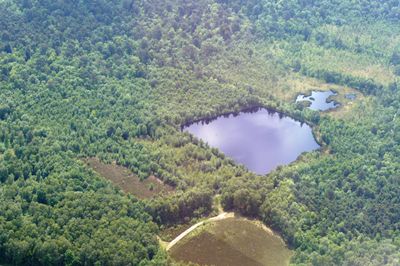
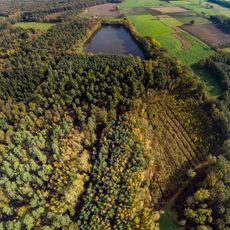
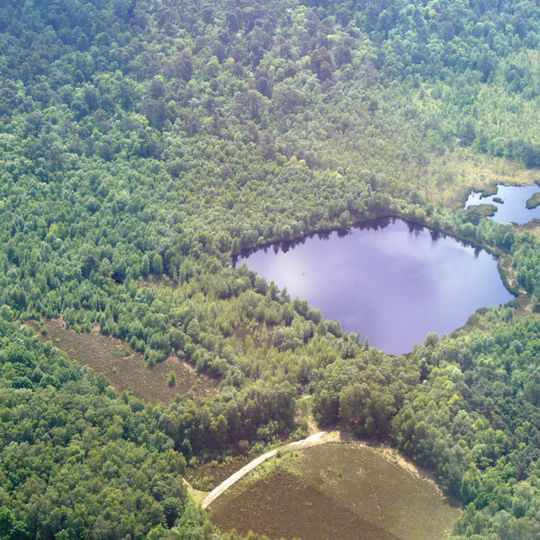
Venner Moor is a nature reserve near Senden with moorland, lakes, and birch forests spanning about 149 hectares. The landscape is shaped by water and vegetation and provides habitat for many animal and plant species.
Venner Moor is a former raised bog that was largely cut for peat; four large, now water-filled peat pits remain at its centre, where renaturation proceeds slowly. A nursery used the peaty soil in the north-eastern part of the birch wood for rhododendrons until the 1980s, and many of those non-native shrubs stayed behind after the business closed. The site is designated as a nature reserve and as a protected area under the Habitats Directive.
The moor's name comes from the nearby village of Venne in the municipality of Senden. Eva Maaser's novels Der Moorkönig (1999) and Die Rückkehr des Moorkönigs (2010) take the Venner Moor landscape as their starting point. In 2002 scenes of the first Münster Tatort, Der dunkle Fleck, were shot here, with a bog body found in the film.
The reserve is reached by cycle and hiking trails that cross it, with two car parks at its edge; these routes see heavy use. The Dortmund-Ems Canal runs directly alongside the area. The water-filled peat pits in the centre are former cuttings, so stay on the marked paths.
The moor holds one of the last known populations of the mole cricket in North Rhine-Westphalia. Since the 1980s, when a nursery gave up using the northeastern peat soil for rhododendrons, many of those non-native shrubs have remained in the reserve.
The community of curious travelers
AroundUs brings together thousands of curated places, local tips, and hidden gems, enriched daily by 93,829 contributors worldwide.