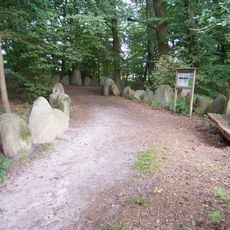
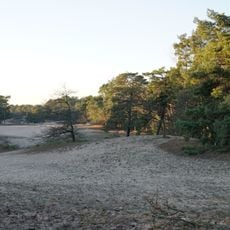
Dünengebiet und Halsetal bei Verden-Neumühlen, Protected sand dunes in Verden, Germany.
The Dünengebiet und Halsetal is a protected nature reserve with open sand surfaces and mixed oak forests surrounding the dune formations. The landscape clearly displays typical features of inland dunes defined by their soil composition and plant cover.
The sand dunes formed during ice ages when water movement transported sand into the Aller river valley lowlands. This geological process created the landscape structure visible today.
The name Verdener Dünen refers to inland dunes on the edge of the Aller glacial valley. The reserve was established in 1930 on the initiative of botanist Reinhold Tüxen, who had stressed the site's regional importance in a 1928 report. Visitors can still see successive stages of vegetation, from bare blown sand to silver-grass and sand-sedge stands.
The area is accessible on foot and easiest to explore during dry weather, as sandy surfaces become difficult to walk on when wet. Visitors should wear sturdy shoes and allow enough time to explore the different sections of the reserve.
The dunes formed around 15,000 years ago and were still migrating when Reinhold Tüxen assessed them in 1928; his report stressed their supraregional importance and led to protection. In May 1992 the body of a 13-year-old boy abducted in Scheeßel by the so-called Maskenmann was found here.
The community of curious travelers
AroundUs brings together thousands of curated places, local tips, and hidden gems, enriched daily by 94,533 contributors worldwide.