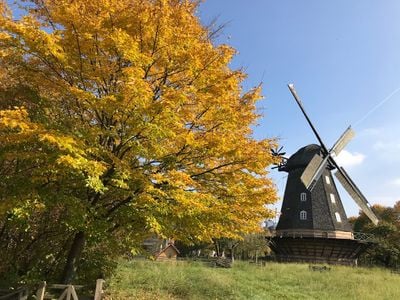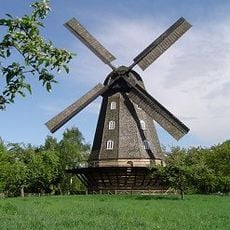
Windmills in Berlin, Windmills in Berlin, Germany
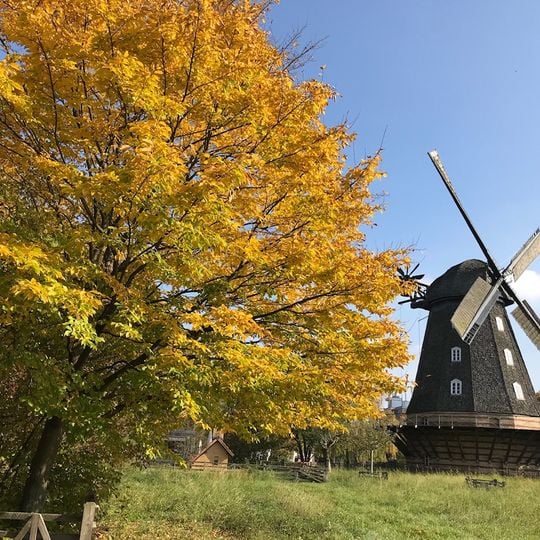
Windmills in Berlin are historical buildings from different periods that shape the character of various neighborhoods. They display different construction styles, from Dutch designs to modern variants, and today some serve as museums or workshops.
The first windmills appeared around 1375 in the villages of Buckow, Rudow and Zehlendorf, where Cistercian monks from Lehnin led mill construction and owned 19 mills. After Prussia's 1810 trade-freedom reforms a short building boom followed, and around 1860 some 150 mills stood in and around Berlin, about thirty of them on the Prenzlauer Berg. Steam power around 1870 and later electrification wiped out most; the last working windmill, the Jungfernmühle in Buckow, stopped in 1980.
These windmills tell the story of Berlin's past as a milling and craft center. Today visitors and locals use the preserved buildings to understand how people once processed grain and organized their daily work.
Visitors can explore the still-active mills across different city districts, with some offering regular opening hours and bread or flour sales. It is worth checking online beforehand to learn which mills are currently operating and how to reach them.
Some of the preserved mills still function and produce flour using traditional methods. These rare places show visitors how the grinding mechanism actually works and what power the wind once provided for production.
The community of curious travelers
AroundUs brings together thousands of curated places, local tips, and hidden gems, enriched daily by 94,379 contributors worldwide.