Süderlügumer Binnendünen, Protected dune area in Süderlügum, Germany.
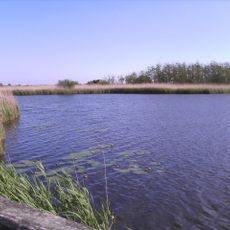
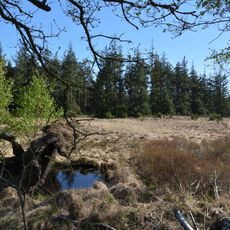
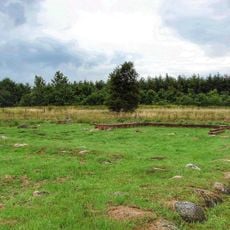
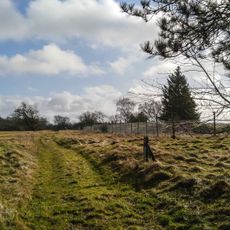
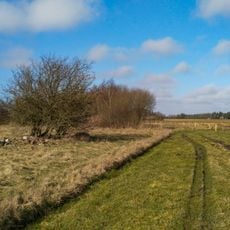
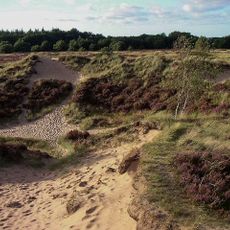
Süderlügumer Binnendünen is a 41.5-hectare inland dune reserve east of Süderlügum, protected since 1938, with dunes up to seven metres high. The open heath is dominated by heather and crowberry, with cross-leaved heath in damp hollows; the sand is lime- and nutrient-poor, washed out from glacial deposits inland. Several walking trails cross the area, which is grazed by sheep and goats to hold back grasses.
The visible dunes are not ice-age formations: research published in 2026 by a team led by Christian Stolz of Europa-Universität Flensburg shows they built up only from the pre-Roman Iron Age onward, after heath farming overused the land. In the 17th century drifting sand threatened Süderlügum, and marram grass was planted to bind it. The 41.5-hectare area was protected in 1938.
The reserve serves as a place where visitors can learn about the region's natural processes and observe rare species in their original surroundings. The dunes provide a habitat for plants and animals that depend on sandy soils and open landscapes.
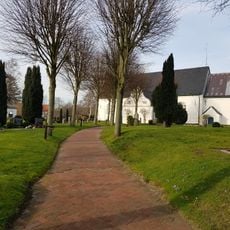
You can reach the area by parking at Norderstrasse or Zur Heide street, where walking trails lead into the dunes. The paths are accessible to visitors and connect different parts of the landscape.
The reserve is one of the few places where the ant species Uralameise (Formica uralensis) and Moor-Kerbameise (Formica picea) are found. The dunes themselves are not ice-age relics: research published in 2026 by a team around Christian Stolz of Europa-Universität Flensburg showed the visible dune bodies formed only since the pre-Roman Iron Age, through overuse by heath farming.
The community of curious travelers
AroundUs brings together thousands of curated places, local tips, and hidden gems, enriched daily by 92,872 contributors worldwide.