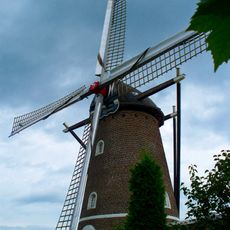
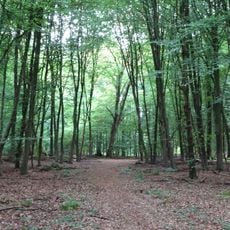
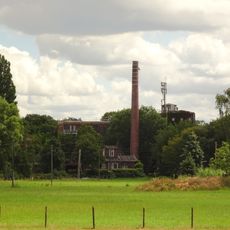
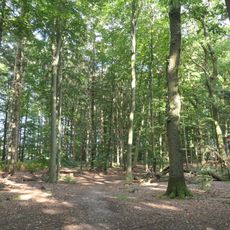
Haus Driesberg, Architectural heritage monument in Goch, Germany.
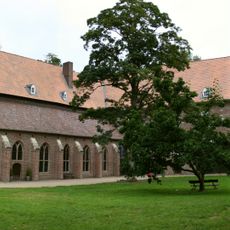
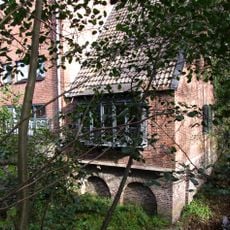
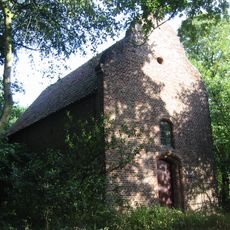
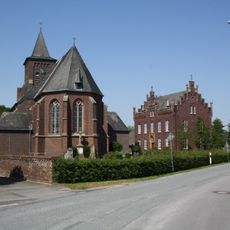
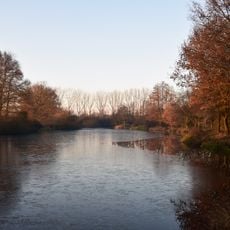
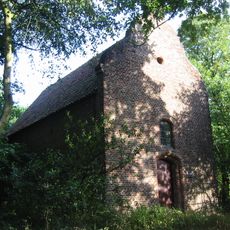
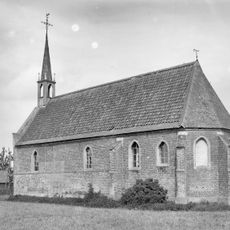
Haus Driesberg is a former moated castle on the left bank of the Niers near Kessel. Its main house, a two-storey four-winged building with corner towers and onion domes, was demolished after 1831; only ground elevations mark its site. Two towers from the 17th or 18th century still flank the farmyard drive of the former outer bailey.
Haus Driesberg was first documented in 1392 as the property of Johan Kodken van Zeller and his wife Gebe. It passed to the von Schewick family in the 15th and 16th centuries, then by marriage in 1626 to the Van Neukirchen gen. Nyvenheim family, who held it until 1753. Gijsbert Willem van Dedem bought it on 22 October 1753; the main house was demolished in the 1830s.
The name Driesberg comes from the lordship that until the 18th century formed its own jurisdiction including the villages of Kessel and Mook. The Van Dedem family, owners from 1753 to 1831, added "van Driesberg" to its name, as Coenraad Johan van Dedem van Driesberg (1783-1852) did. The driveway is lined with lime trees and a row of sweet chestnuts, both groups protected as natural monuments.
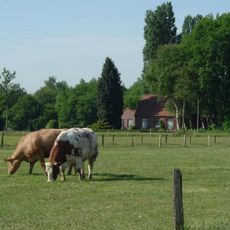
The building is located near the village of Kessel and is reachable from Goch's center, with the surrounding area being rural. Visitors should take time to view the architecture at leisure and explore the area on foot, as it is typical of this countryside.
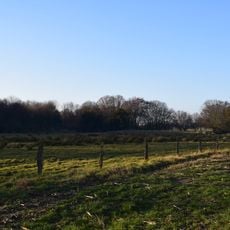
The main house was demolished after 1831, but its footprint is still legible as low rises in the ground beside the Niers. The surviving forecourt towers, from the 17th or 18th century, now flank the farmyard drive, and the lime-tree avenue and rows of horse chestnuts on the estate are protected as natural monuments.
The community of curious travelers
AroundUs brings together thousands of curated places, local tips, and hidden gems, enriched daily by 93,751 contributors worldwide.