Burg Mühlhausen/Thüringen, Medieval castle remains in Mühlhausen, Germany.
Burg Mühlhausen is a castle ruin on the southern edge of the Unstrut basin in this medieval town of Thuringia. Today the site is marked by an artistic work covering a former brewery cellar from the 1800s.
Mühlhausen was first documented in 775 as "Molinhuso"; by 974 it was an Ottonian royal court with a palace, and Emperor Otto granted the Reichsburg Mulinhusa to his wife. A smaller castle was built inside the palace complex. In 1180 Henry the Lion's feud with Frederick Barbarossa led to the destruction of town and castle, which were rebuilt; in 1198 Philip of Swabia was elected king here. A dividing wall between castle and town followed in 1251, destruction in 1256, rebuilding in 1287, and after the next destruction the castle was left unrestored.
The site carries a name rooted in medieval rule and serves as a reminder of this location's importance to the city's identity. Today it functions as public space where locals and visitors pass through, while the nearby preserved city wall still shows the medieval character of the surroundings.
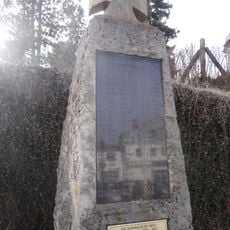
The castle site is located near the northern city wall and can be easily found by following a memorial plaque. From here, visitors can also explore nearby sections of the medieval fortifications.
The castle site now lies beneath Mühlhausen's bus station, a 1.5-hectare area once ringed by moats and water channels. Street names, two gates and a cistern still mark its old boundaries, though no major archaeological traces have been found because the district was heavily rebuilt.
The community of curious travelers
AroundUs brings together thousands of curated places, local tips, and hidden gems, enriched daily by 92,839 contributors worldwide.