Spitzen Gebel, Gothic building in Mitte, Germany
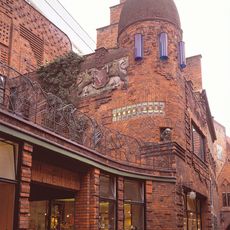
Spitzen Gebel is a two-storey red-brick townhouse with a steep pointed gable at Hinter dem Schütting 1 in Bremen. Its Utlucht bay has four sandstone-framed windows on each floor, and the gable windows are small rectangles. The building stands as the last reconstructed medieval burgher house in the Hanseatic city.
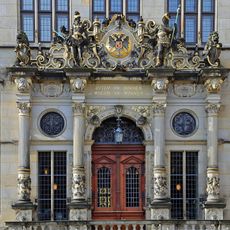
The house dates from around 1400 and is Bremen's last reconstructed medieval burgher house. Its projecting bay window (Utlucht) was added in 1590 and the portal around 1610. Destroyed in 1944, it was rebuilt from 1948/49 to 1950 to plans by architect Bernhard Wessel for a brewery, with four sandstone-framed windows on the bay and a slightly lower gable.
The Low German name Spitzen Gebel means "pointed gable", after the late Gothic gable that crowns the facade. From 1913 the building housed the office of the Vereinigten Klavierträger, the united piano movers, and older Bremen residents still call it the Klavierträgerhaus. The tavern keeps their custom of the Sluk ut de Lamp: a schnapps made to a centuries-old Swedish family recipe is served from an old lamp.
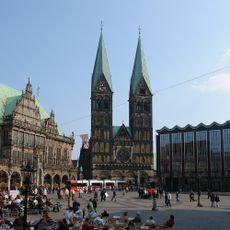
The building is located at Bremen's marketplace and is typically accessible during visiting hours. Visitors should note that opening times vary by day and may change on Werder Bremen home game days.
Piano movers developed their own tradition of hiding schnapps in lanterns, which led to the creation of the signature drink 'Sluk ut de Lamp'. This beverage is still served from decorative lamps today, a remnant of the workers' creative past.
The community of curious travelers
AroundUs brings together thousands of curated places, local tips, and hidden gems, enriched daily by 93,403 contributors worldwide.