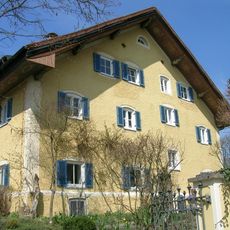
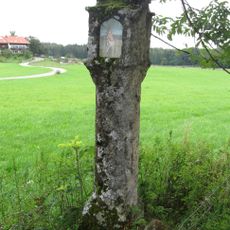
Schloss Altenburg, Medieval castle in Feldkirchen-Westerham, Germany
Schloss Altenburg is a medieval castle in Feldkirchen-Westerham featuring multiple floors with distinct architectural elements spanning different periods. The complex includes towers, defensive walls, and residential quarters built across various phases of construction.
Around 1050 the Falkensteiner built a castle here, which Duke Otto II of Bavaria had destroyed and razed. Around 1258 the Lords of Schalchdorf rebuilt a larger fortress, and in 1434 Count Otto II of Maxlrain acquired and enlarged it. Duke Albert of Bavaria had it rebuilt in its present form in 1560; during the Thirty Years' War it was the only castle in Bavaria to withstand Swedish attack.
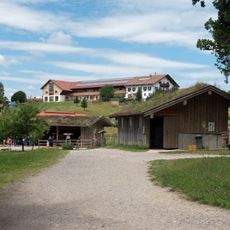
The name Altenburg, first recorded around 750 in the Fagana land register, simply means "old castle". The estate below the bluff, Niederaltenburg, was the castle's own farm and kept its name. From 1953 an evangelical mission service ran a school here training girls for social work, and from 1992 to 2011 the building served as a seminar and meditation centre called Haus der Stille.
Schloss Altenburg stands at 633 m above sea level on the high bank of the Mangfall, south of Aschbach in the municipality of Feldkirchen-Westerham. The grounds are reached from the valley side, where the former estate farm Niederaltenburg lies below the castle. A bridge crosses the former moat into the four-winged complex, and the landscaped park merges into the adjoining forest. The medieval Burgstall Altenburg, a separate earthwork, lies 500 m to the south in the Lehenholz.
The castle survived the Thirty Years' War as the only Bavarian castle to withstand the attacking Swedes. A medieval motte-and-bailey site, the Burgstall Altenburg, lies 500 m south in the Lehenholz on a spur above the Mangfall and is recorded as a separate monument.
The community of curious travelers
AroundUs brings together thousands of curated places, local tips, and hidden gems, enriched daily by 93,504 contributors worldwide.