Löwenburg, Medieval castle ruins in Lämershagen district, Bielefeld, Germany.
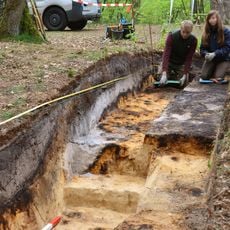
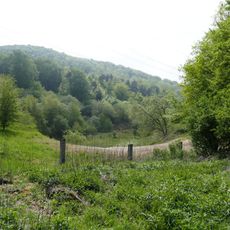
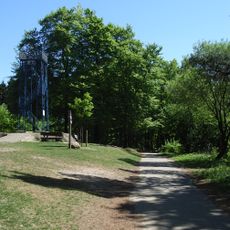
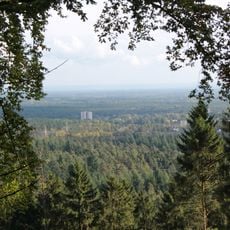
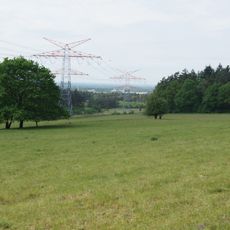
The Löwenburg is a castle ruin on a hilltop in Bielefeld marked by earthen walls roughly 50 meters in diameter. It sits on the eastern summit of Lewenberg and its structures reveal the layout of a medieval fortification.
Bernhard II, Lord of Lippe, began the castle in 1177 to secure his village foundations in the disputed borderland with the County of Ravensberg. A year after construction started, Emperor Frederick I Barbarossa campaigned against Henry the Lion, and the castle was probably destroyed then. The border between Ravensberg and Lippe later stabilised east of the site at the Menkhauser Bach.
The name Löwenburg refers to Henry the Lion, whose supporter Bernhard II of Lippe built the castle; locals also call the site Hünensaut. The walled plateau measures just under 50 metres across, and the surrounding ditch and rampart can still be traced on the eastern summit of the Lewenberg above the Markengrund cutting.
The site is protected as a registered archaeological monument and remains accessible year-round for exploring the medieval structures. Wear sturdy shoes since the terrain is hilly and the old earthen walls invite climbing.
The castle's name refers to Henry the Lion, whose ally Bernhard II of Lippe founded it; the site is also called Hünensaut. After the fortress fell, the border between Ravensberg and Lippe settled at the Menkhauser Bach, and the counts of Ravensberg built no new castle, as their Sparrenburg seat lay only nine kilometres southeast.
The community of curious travelers
AroundUs brings together thousands of curated places, local tips, and hidden gems, enriched daily by 92,644 contributors worldwide.