Zwergenhöhle, Natural cave monument in Bielefeld, Germany
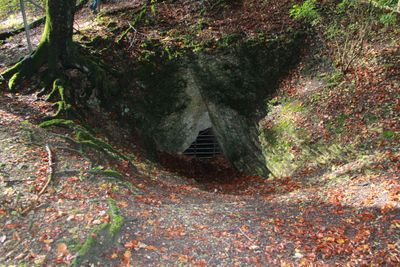
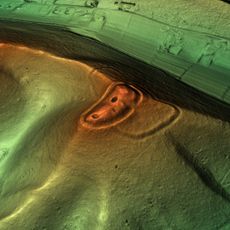
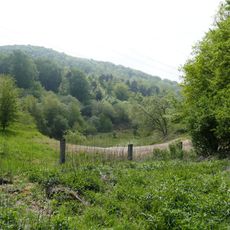
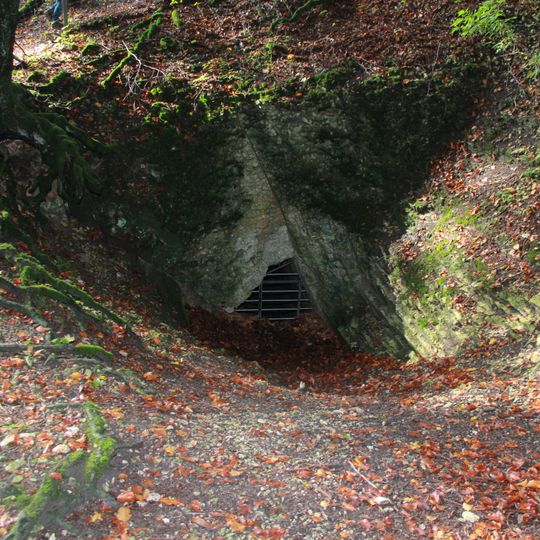
Zwergenhöhle is a karst cave on the southern ridge of the Teutoburg Forest at the Jostmeiers Berg in Bielefeld's Senne district, the only natural cave within the city area. It is 11 metres long and lies in Lower Turonian limestone of the Oerlinghausen Formation. The entrance sits on a ridge about 50 metres below the 260.5-metre summit.
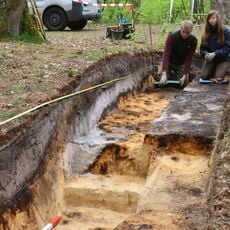
Julius Wilbrand conducted the first scientific survey of the cave around 1887, shortly after it had been cleared, and measured a length of 20.80 metres. Collapse material later filled much of the cavity. A renewed excavation and survey at the end of the 20th century established the present length of 11 metres.
The name "Zwergenhöhle" means "dwarf cave", but the sources document no dwarf legend tied to this site; the name is a traditional folk label. What visitors can actually observe is the cave's role as a bat roost: a protective grille was first fitted in 2011 to shield hibernating bats, and it is closed from September to May.
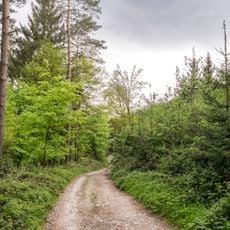
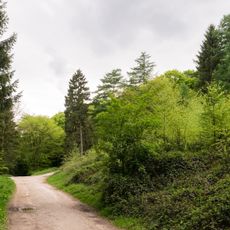
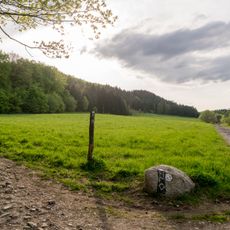
The cave lies off the marked hiking trails and is unsigned, so it is hard to find; from the trail southwest of the cave, about 120 metres of uphill walking are needed. A protective grille at the entrance, first installed in 2011, is closed from September to May for hibernating bats. The cave sits on a ridge about 50 metres below the 260.5-metre summit of Jostmeiers Berg.
The cave formed through limestone dissolution caused by carbonic acid in groundwater rather than through the usual layering of rock strata. This chemical process created an unusual geological feature that sets it apart from caves formed by other mechanisms.
The community of curious travelers
AroundUs brings together thousands of curated places, local tips, and hidden gems, enriched daily by 92,678 contributors worldwide.