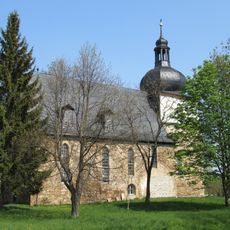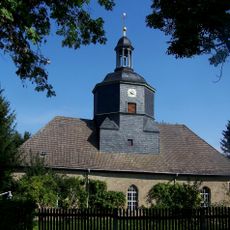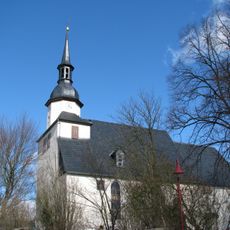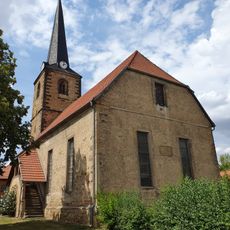
Camposanto Buttstädt, Renaissance cemetery in Buttstädt, Germany
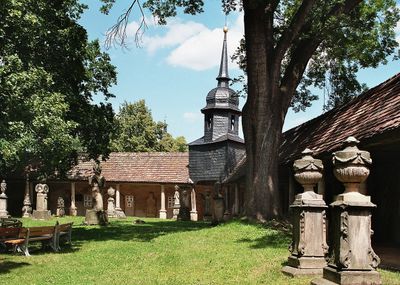
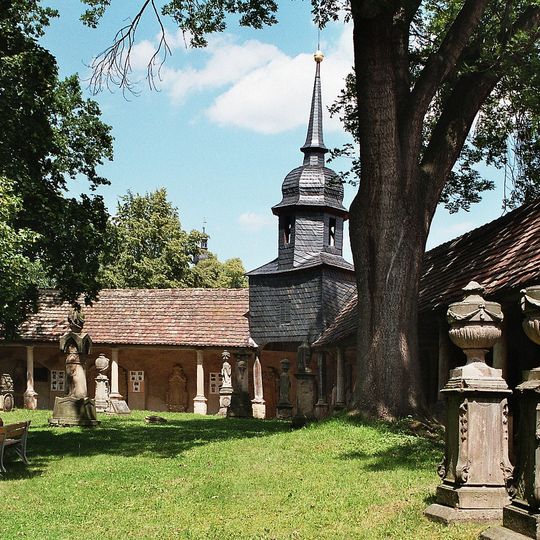
Camposanto Buttstädt is a cemetery from the 16th century featuring sandstone arcades that shelter burial plots and display architectural styles spanning the Renaissance to Baroque periods. The covered halls protect the graves from weather while creating a gallery-like structure with columns and open sides.
Camposanto Buttstädt was laid out in 1591 on the model of the Italian camposanti, on the site of an earlier churchyard belonging to the Wendish St. Johannis church outside the town walls. The gate bears the date 1592, when the east and north walls were built; an inscription on the east wing records the inner colonnades of 1603. Burials continued until 1861, and a town fire in 1684 destroyed the Johanniskirche and damaged the cemetery.
The gravestones and inscriptions reflect how residents from different social backgrounds honored their deceased and expressed artistic preferences through burial monuments. Walking through, you can spot designs and details that reveal the craftsmanship and stylistic choices valued by Buttstädt's past inhabitants.
The cemetery can be reached via marked paths from the market square and St. Michael's Church without needing to register in advance. You can walk in freely and explore at your own pace, especially if you want to examine the graves and arcade structures up close.
The east wing carries an inscription dating the inner colonnades to 1603, and one pedestal preserves the name of town treasurer Valentin Rensch, either donor or building supervisor. The column shafts are smooth, rusticated or fluted. The gate tower was probably added around 1700 and is clad in slate.
The community of curious travelers
AroundUs brings together thousands of curated places, local tips, and hidden gems, enriched daily by 92,657 contributors worldwide.