Raspehaus, Heritage monument in Rastenberg, Germany
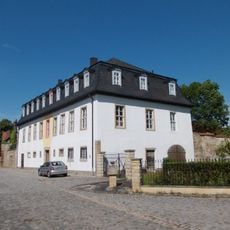
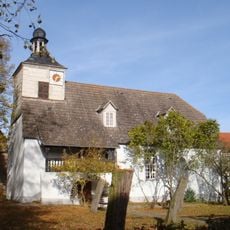
The Raspehaus is a half-timbered building in Rastenberg displaying the characteristic features of traditional German construction from the 17th century. Its wooden frame structure and architectural details are typical of residential houses from that period.
Thomas Raspe, a princely Saxon district governor, had the house built in 1605; it is considered one of the oldest residential buildings in the Sömmerda district. His descendants lived in it until the 17th century and rebuilt it after a devastating fire during the Thirty Years' War, as an inscription above the courtyard door with the date 1641 recalled. In 1921 images of the house were used for printing emergency money during the German inflation.
The building displays the craftsmanship style typical of the Thuringia region through its half-timbered construction and wooden frame details. You can see how houses were traditionally built in this area by observing the structural elements.
The Raspehaus stands at Raspeplan 4 in central Rastenberg, set back from the street behind a courtyard reached by a high outdoor staircase. The building has stood empty since the late 1970s and is not open to visitors; its roof was only emergency-secured in the 1990s and leaks again. Since 2023 the house belongs to a local association of 13 members that intends to restore it.
In 1921, during Germany's inflation, images of the Raspehaus were used on emergency banknotes printed in Rastenberg. The house had been lived in until the late 1970s, then stood empty and decayed; a large archway once linked to it by a wall has disappeared, as old photographs show.
The community of curious travelers
AroundUs brings together thousands of curated places, local tips, and hidden gems, enriched daily by 94,353 contributors worldwide.