Stadtgarten Schwäbisch Gmünd, Urban park in Schwäbisch Gmünd, Germany
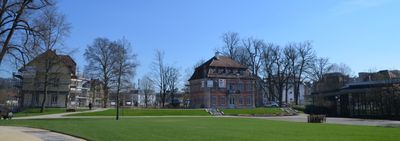
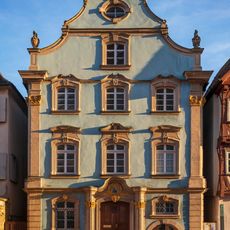
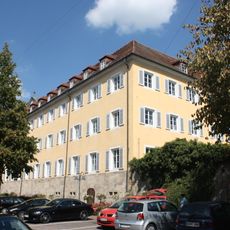
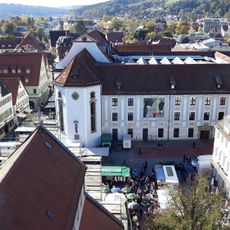
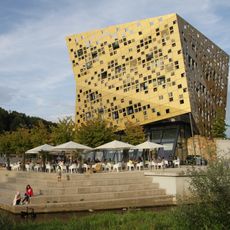
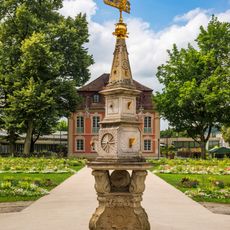
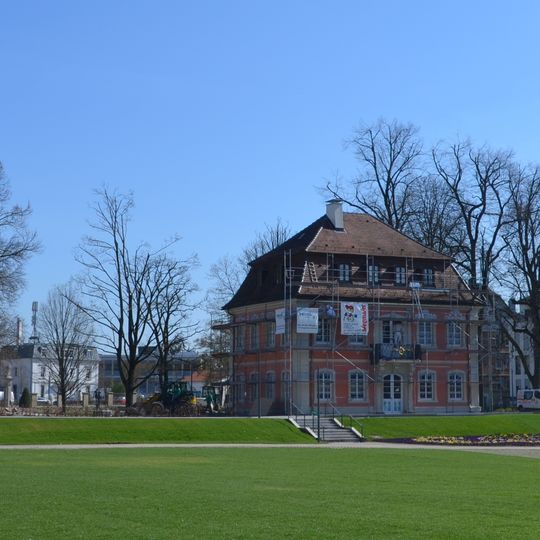
Stadtgarten Schwäbisch Gmünd is a park on the edge of the old town, split into an older eastern upper garden and a younger western lower garden. The upper part holds the Stahlsches Schlösschen, a Rococo building of 1780, and the CongressCentrum Stadtgarten stands beside the grounds. The park was laid out in 1779 in 16 fields.
Georg Franz Stahl Edler von Pfeilhalden laid out the park in 1779 on former gardens and fields, divided into 16 plots with greenhouses, a pavilion and fountains. In 1780 he had the Rococo Schlösschen built to plans by city architect Johann Michael Keller as a gift for his wife. From 1885 the grounds belonged to factory owner Gustav Hauber, and in 1898 they passed into municipal ownership.
The Geigerbrünnele is an eight-rayed neo-baroque fountain designed by Wilhelm Widemann, themed on the "Geigerle von Gmünd". The artist gave it to the city in 1906, and it was renewed in 1991/92. The baroque figures at the garden gate were made in 1962 after models by Jakob Wilhelm Fehrle.
The park is accessible from multiple entry points and features paved pathways throughout, making navigation straightforward. Visitors will find benches and waste bins strategically placed for comfortable stays.
The Sonnenuhrpyramide, a sundial pyramid made in 1770, stood in Stahl's garden until 1810 and returned to the Stadtgarten in 1994. It was renewed in 1956/57 and 1991; replaced parts are kept in the Stadtmuseum im Prediger. It is read as a scholar's piece and a plaything, an emblem of the Gmünd upper class of its time.
The community of curious travelers
AroundUs brings together thousands of curated places, local tips, and hidden gems, enriched daily by 93,014 contributors worldwide.