Burg Elmendorf, Medieval castle ruins in Bad Zwischenahn, Germany.
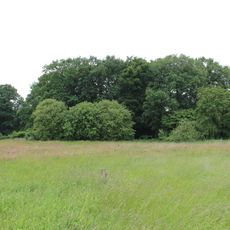
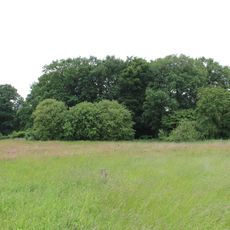
Burg Elmendorf consists of three artificial mounds that once supported a medieval fortress built in the 12th century, with only earthworks remaining visible today among the rolling countryside.
The site was likely founded in the 9th century; a palisaded farm stood here before a first motte was built in the 11th century and burned around 1100. In 1134 the castle is first explicitly mentioned as the residence of Friedrich von Anvorde, and it later belonged to the lords of Elmendorff as ministerials. In 1331 castle and farm passed by exchange to the Counts of Oldenburg.
The name Dreibergen refers to the three mounds, which were long taken for prehistoric burial mounds until Dieter Zoller's 1966–1968 excavations identified a motte-and-bailey castle. Between the mounds and the Zwischenahner Meer stood the castle chapel of St. Bartholomew, consecrated in 1134 by Archbishop Siwar. The site lies in the Dreibergen nature reserve.
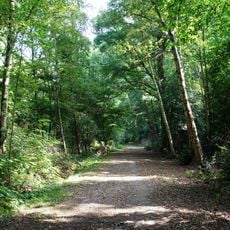
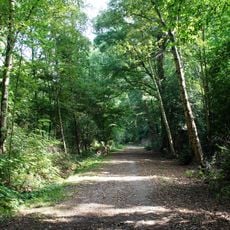
The ruins are freely accessible daily with parking available at Herrenholz and Niblheimweg, reached by short walking paths and accessible via local bus connections to Bad Zwischenahn.
The three mounds were long taken for prehistoric burial mounds; Dieter Zoller's excavations in 1966–1968 showed a motte-and-bailey layout instead. On the western hill stood a twelve-sided wooden tower 12 m across, later replaced in the second quarter of the 13th century by a timber-framed house with a hearth. A 1943 air-raid bunker disturbed the eastern hill.
The community of curious travelers
AroundUs brings together thousands of curated places, local tips, and hidden gems, enriched daily by 92,724 contributors worldwide.