Gipskarstlandschaft Questenberg, Protected nature reserve in Südharz, Germany.
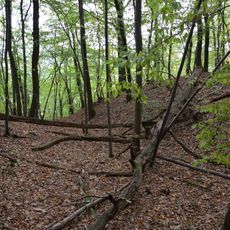
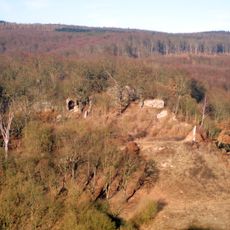
Gipskarstlandschaft Questenberg is a 3,891-hectare nature reserve designated in 1996 along the Zechstein belt between Uftrungen and Wettelrode. It contains sinkholes, dolines, ponors such as the Dinsterbachschwinde, karst springs, and the Bauerngraben, a 350-metre-long and 100-metre-wide depression holding the largest episodic gypsum karst lake in central Germany. Beech and oak woods cover much of the reserve, and old copper shale spoil heaps remain visible.
The area was shaped by copper mining since medieval times, with spoil heaps altering the natural surface and remaining visible today. These mining activities left lasting marks on the landscape's geology and continue to define its character.
The reserve lies in the Zechstein belt of the southern Harz, and the Karstwanderweg Südharz long-distance trail crosses it, with a section running through the protected area. The name Questenberg refers to the nearby village within the municipalities of Südharz, Berga and Sangerhausen. The former copper shale heaps, now colonised by heavy-metal grassland, are legacies of the region's mining past.
Multiple hiking trails run through the protected area, allowing visitors to explore the various landscape features. Downloadable GPS data and maps help with planning and navigation to move safely through the terrain.
The largest episodic gypsum karst lake in central Germany lies in the Bauerngraben, a sinkhole basin about 350 metres long and 100 metres wide southeast of Breitungen at the foot of the Wurmberg. The Glasebach stream enters it from the north; when the water drains away, the basin floor is left dry.
The community of curious travelers
AroundUs brings together thousands of curated places, local tips, and hidden gems, enriched daily by 93,138 contributors worldwide.