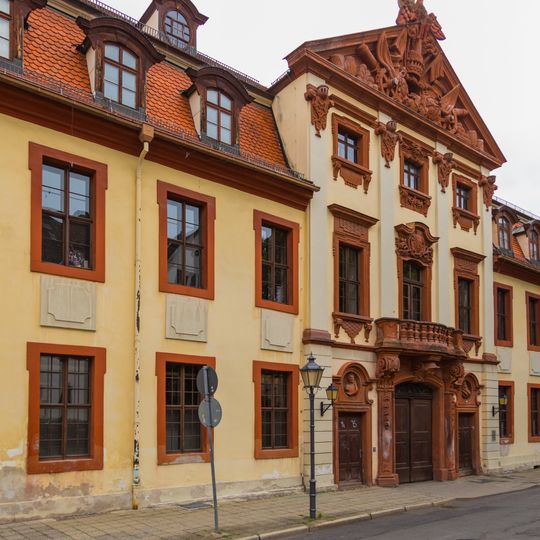
Seckendorffsches Palais, Baroque palace in Altenburg, Thuringia, Germany
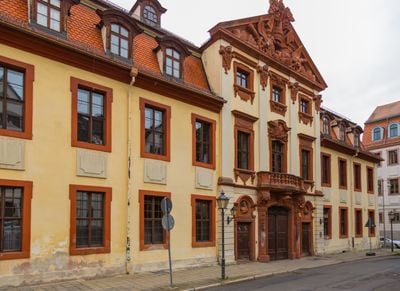
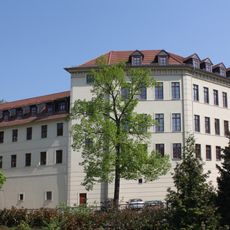
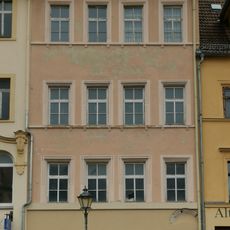
The Seckendorffsches Palais is a baroque palace in Altenburg, Germany, built in 1724 as a four-winged structure with inner courtyards. The facade is characterized by a curved balcony above the main entrance, while a reddish porphyr stone relief with military symbols and an eagle on a crown emphasizes the high rank of its builder.
The palace was built in 1724 by Generalfeldmarschall and Reichsgraf Friedrich Heinrich von Seckendorff and embodied his high status in the military and nobility hierarchy. Over time, the building transformed from a private residence into a court building, fundamentally changing its function and importance for the city of Altenburg.
The palace takes its name from its builder, Generalfeldmarschall Friedrich Heinrich von Seckendorff, and reflects the power of the noble family that created it. The sculpture of Justice on the facade shows that the building once served as a court and represented the connection between authority and justice.
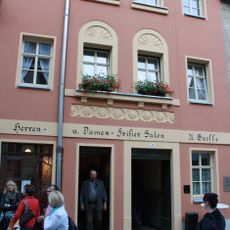
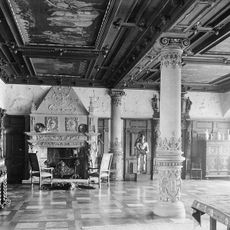
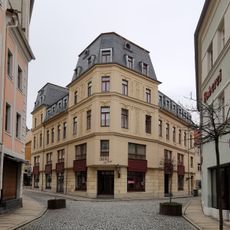
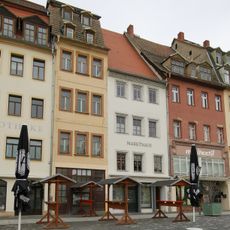
The palace stands in Altenburg's old town, just past the famous Skat fountain, with the historic Grosse barbershop directly opposite. The rooms are now used by various public services, including theatre-related ones, so the interior is generally seen by appointment or during events rather than on a casual visit.
The gable relief is carved from Rochlitz porphyry and shows cannon, cannonballs and drums, military symbols matching Seckendorff's rank as field marshal; the eagle above the count's crown marks his title of Reichsgraf. The palace stands behind Altenburg's famous Skat fountain, directly opposite the historic Grosse barbershop. From 1816/17 the publisher Friedrich Arnold Brockhaus laid here the foundation for his Leipzig firm.
The community of curious travelers
AroundUs brings together thousands of curated places, local tips, and hidden gems, enriched daily by 93,254 contributors worldwide.