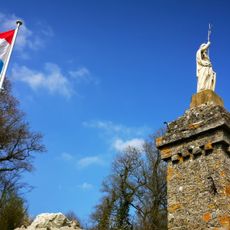
Schloss Bübingen, Medieval château ruins in Perl, Saarland, Germany.
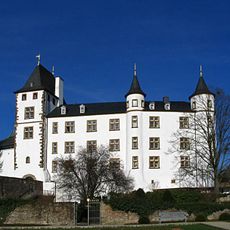
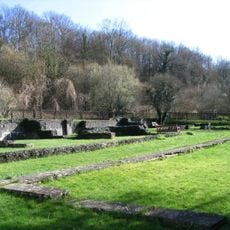
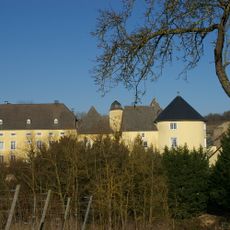
Schloss Bübingen is a ruined Renaissance castle in Bübingen, part of Perl in Saarland. Rebuilt in the second half of the 18th century, it was a three-storey, nine-axis building with a baroque roof, its main front 35 metres long and flanked by two two-axis projections. The castle chapel occupied the ground floor of the northeast tower. It has been a ruin since 1945.
Schloss Bübingen grew from a Frankish manor on Nennig territory, where the Elector of Trier, the Duke of Lorraine and the Duke of Luxembourg held joint sovereignty until 1769. Between 1330 and 1340, the Luxembourg provost Gobel von Remich rebuilt the seat as a water castle guarding the Moselle crossing at Remich together with Schloss Thorn. French troops under Marshal Créquy destroyed it completely in 1668; in the second half of the 18th century it was rebuilt as a three-storey, nine-axis palace with a Baroque cupola. In January/February 1945 the US 94th Infantry Division destroyed it again during the fighting for the Orscholzriegel.
The name Bübingen comes from the noble family that held the site as its ancestral seat; the manor belonged to the Luxembourg lordship within Nennig, while nearby Schloss Berg was the Lorraine seat. Until 1769 the Elector of Trier, the Duke of Lorraine and the Duke of Luxembourg jointly ruled Nennig, so its villagers were subjects of different lords. The castle archive, kept there until 1954, is now in the Landesarchiv Saarbrücken.
The ruin is privately owned and a visit requires advance permission from the owners. It is advisable to contact the property holders before planning a visit.
In 1939, the medical officer Dr. Harms found the castle archive in the attic and handed it to the Landesmuseum in Trier, saving it from destruction. The holdings, kept in the castle until 1954, are now in the Landesarchiv in Saarbrücken.
The community of curious travelers
AroundUs brings together thousands of curated places, local tips, and hidden gems, enriched daily by 94,139 contributors worldwide.