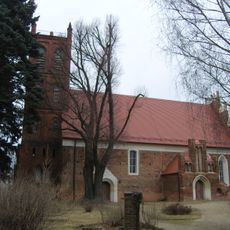
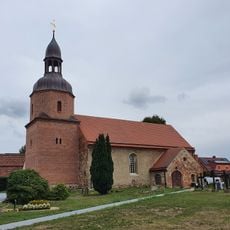
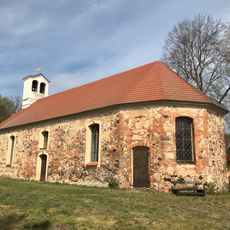
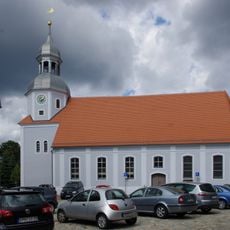
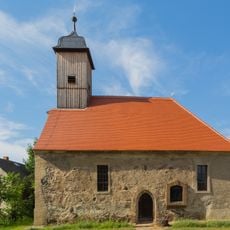
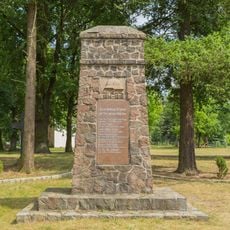
Mumien von Illmersdorf, Mummy crypt in a village church in Illmersdorf, Germany
The Mumien von Illmersdorf consists of eleven naturally preserved remains resting in the church crypt, representing the largest collection of its kind in Brandenburg. The underground chamber provided cool and dry conditions that enabled this exceptional preservation over many centuries.
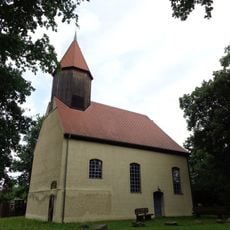
Caspar Ernst von Normann, an officer from a Rügen noble family, bought the Illmersdorf estate in 1738 and had the church built in 1742 in place of the estate chapel. He had a crypt of 7.80 by 3.10 by 2.30 metres installed beneath the gallery for himself and his wife Johanna Louise von Barfus. The builder himself was buried here in 1748, and the crypt was used for burials until 1821.
The coffins hold five women, three men, two children and one infant; the builder's daughter-in-law died in childbirth and was buried with her baby in the same coffin. Older villagers recall grave goods in the coffins, probably looted by the end of the Second World War. In 1945 Red Army soldiers plundered the crypt, and residents stopped the coffins from being burned on the village square.
Five of the eleven mummies lie behind a glass pane in four coffins; the other six coffins stay closed. The pane keeps the crypt climate dry and even to hold back mould. In 2013 about 1,500 people visited the timber-framed church, which has been a listed monument.
This is the only known mummy collection in Lusatia, making it particularly valuable for archaeological research in eastern Germany. Natural mummification in this region was rare and unexpected, which gave these findings special scientific importance.
The community of curious travelers
AroundUs brings together thousands of curated places, local tips, and hidden gems, enriched daily by 93,616 contributors worldwide.