Kaiser-Wilhelm-Denkmal, Historic monument in Norderney, Germany
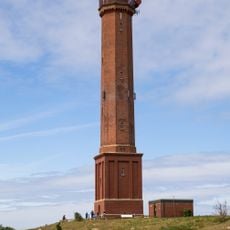
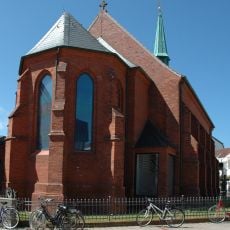
The Kaiser Wilhelm Monument is a 13-meter obelisk at the junction of Bismarckstrasse, Friedrichstrasse, Herrenpfad and Knyphausenstrasse, in front of St. Ludgerus Catholic Church. It is built from stones from 75 German cities, 61 of them donated and engraved with their names; the heaviest, from Aschaffenburg, Baden-Baden and Leipzig, weigh five tonnes each, while the Berlin granite block weighs six.
The idea for the obelisk came from Paul Wallot, architect of the Reichstag, and the foundation stone was laid on Sedantag, 3 September 1898. The monument was unveiled on 2 September 1899 by pastor Ludwig Weber, a year and a half after Wilhelm I's death. The bronze bust was by Georg Küsthardt of Hildesheim, cast in Berlin; the stones were arranged by Helfried Küsthardt and the concrete work done by the Norderney firm Rath.
The monument displays engraved names of 61 German cities across its stones, showing how different regions of the country are connected through this work. Visitors can read these names while passing by and see how the monument represents German diversity.
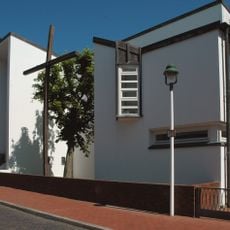
The obelisk stands on a nameless square at the junction of Bismarckstraße, Friedrichstraße, Herrenpfad and Knyphausenstraße, in front of the Catholic church St. Ludgerus. The square carried the name Kaiser-Wilhelm-Platz from 31 August 1899 until the designation was struck from records between 1939 and 1946. An early plan to place the obelisk on the promenade at the end of Bismarckstraße was abandoned.
The bronze bust of Wilhelm I and two bronze plaques were melted down in 1918 for weapons production; the Reichsadler was removed at the war's end. Since 1938 a stone seagull donated by the Norderney community has stood where the bust was, and the obelisk's tip was left bare.
The community of curious travelers
AroundUs brings together thousands of curated places, local tips, and hidden gems, enriched daily by 92,780 contributors worldwide.