Schloss Marientraut, Medieval water castle in Hanhofen, Germany
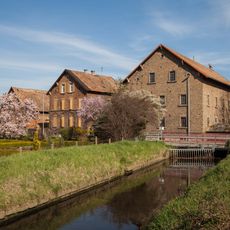
Schloss Marientraut is a fortified residential castle in Hanhofen surrounded by water defenses and protective walls for security. The central building complex shows construction from multiple periods, combining architectural elements that reflect changes made over time.
Bishop Raban von Helmstatt ordered construction of this fortified residence in 1414 to secure territorial control and manage water supply to nearby Speyer. Just three years later, stones from its dismantled walls were repurposed to strengthen the urban defenses of the Imperial City after a military conflict.
The castle bears the name of Saint Mary and displays a stone plaque with an inscription from 1463, reflecting religious importance for the bishopric of that era. Such religious symbols served to connect the rulers to the church and reinforce their spiritual authority.
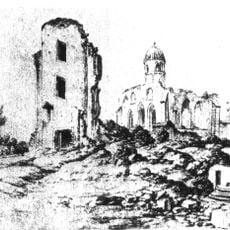
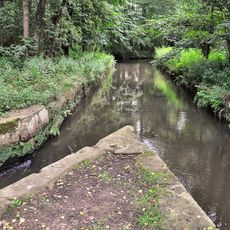
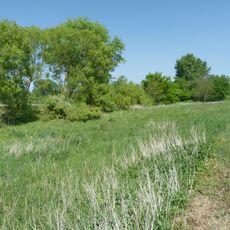
The castle is gone: only the outlines of the former moats remain at the western end of Hanhofen, north of today's Hauptstraße, so there is no building to enter. Look for the moat traces in the open ground; the 1463 inscription stone of Bishop Matthias von Rammung is kept in the Historisches Museum der Pfalz in Speyer.
The 1463 inscription stone commissioned by Bishop Matthias von Rammung, bearing the year and his name, was later built into a house in Schwegenheim; it is now kept in the Historisches Museum der Pfalz in Speyer. The moats were fed by an underground channel from the nearby Woogbach.
The community of curious travelers
AroundUs brings together thousands of curated places, local tips, and hidden gems, enriched daily by 92,637 contributors worldwide.