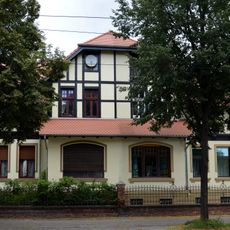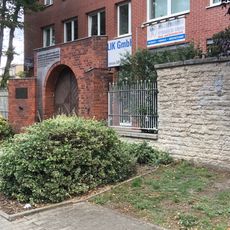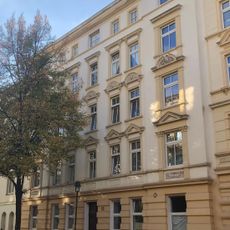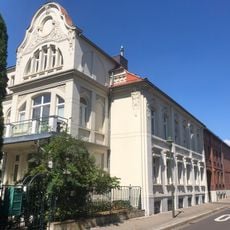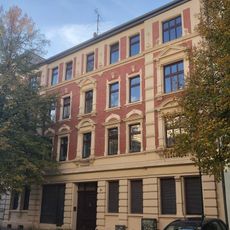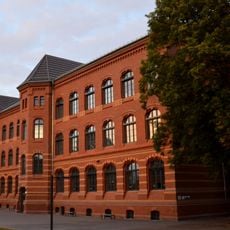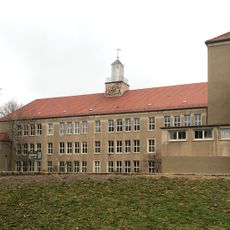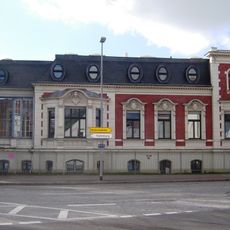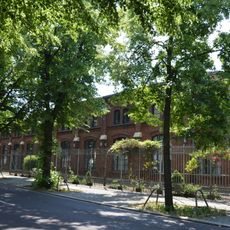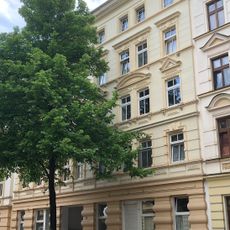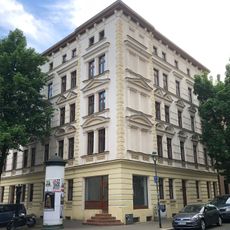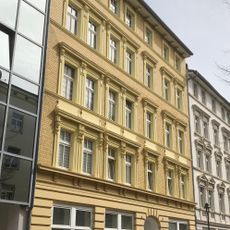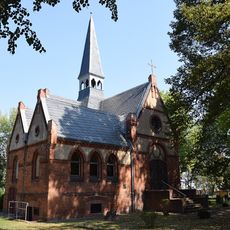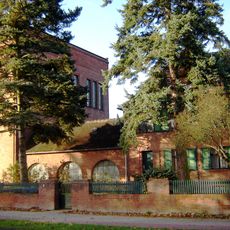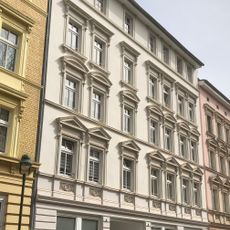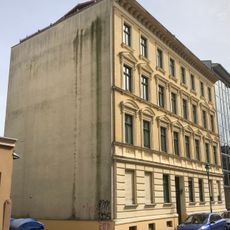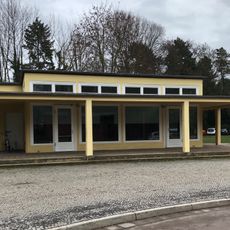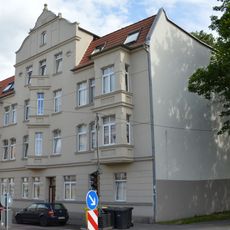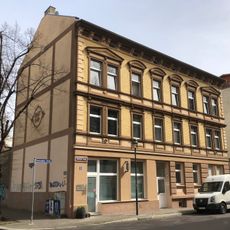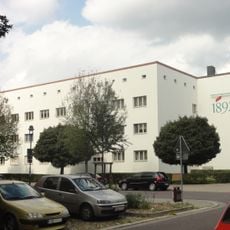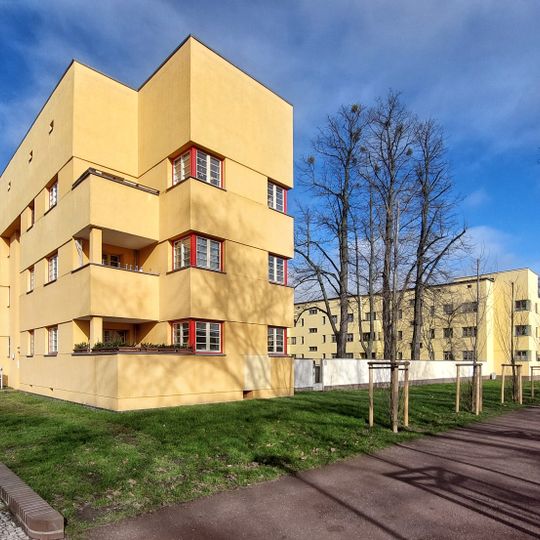
Hermann-Beims-Siedlung, Social housing estate in Stadtfeld West district, Magdeburg, Germany.
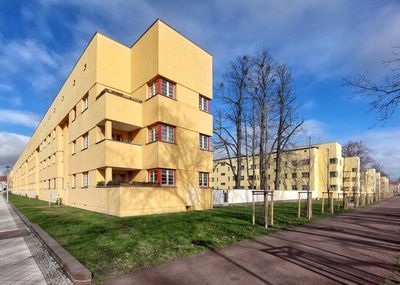
Hermann-Beims-Siedlung is a residential complex in Magdeburg with three-story buildings and flat roofs arranged in a grid pattern. The houses feature front gardens and generously proportioned shared courtyards.
The complex was built between 1924 and 1932 to provide affordable housing during Germany's Weimar Republic period. The project emerged when cities were seeking new solutions for housing shortages.
The estate demonstrates early 20th-century design principles in its facade treatments, with systematically arranged plaster bands and brick patterns. This approach to facade design was typical for housing estates of that era and aimed to show that even simple apartments deserved thoughtful architectural care.
The buildings are oriented north-south, which optimizes natural ventilation and light conditions. Green spaces are integrated throughout the grounds, providing air circulation and areas to spend time outdoors.
The project was shaped by several architects including Johannes Göderitz, Konrad Rühl, and Gerhard Gauger, who together developed an innovative approach to modern housing. Their collaboration showed a new understanding of how people could live and work in cities.
The community of curious travelers
AroundUs brings together thousands of curated places, local tips, and hidden gems, enriched daily by 90,755 contributors worldwide.