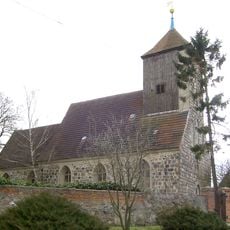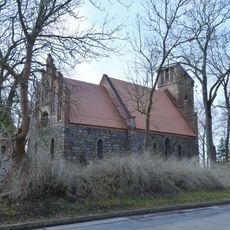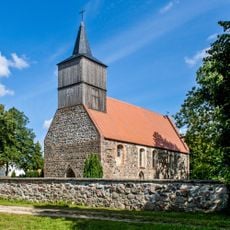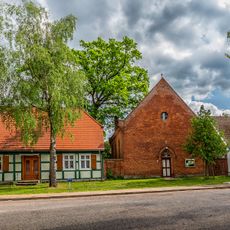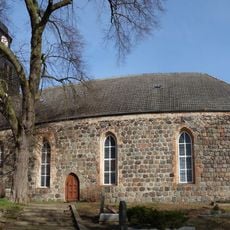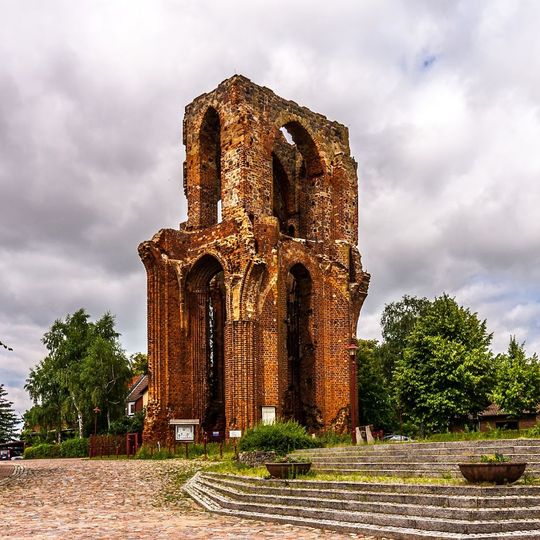
Klosterkirche, Gothic monastery in Gramzow, Germany
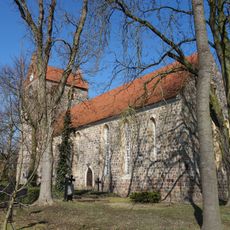
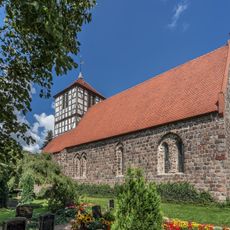
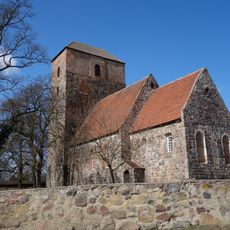
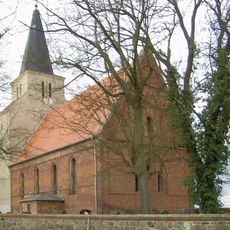
Klosterkirche is a Gothic church building in Gramzow characterized by pointed arches, ribbed vaults, and thick stone walls. This structure displays the construction methods typical of medieval religious buildings and remains a defining feature of the town.
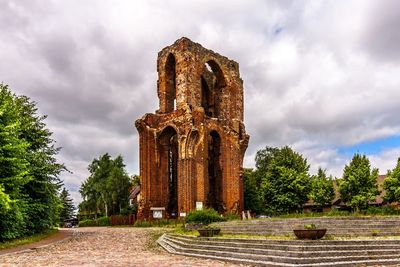
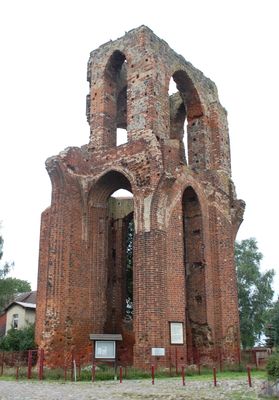
Duke Bogislaw I of Pomerania founded the Premonstratensian monastery around 1177, exchanging Gramzow for the village of Caruiz. After war damage it was refounded around 1216. The Reformation turned it into an electoral office around 1545, and in 1714 the monastery burned down; only the west part survived as a ruin.
The name Ratzeburg, recorded for a deserted settlement near the Rathsburgseen by Blankenburg, points to the origin of the first canons, who may have come from the Ratzeburg cathedral chapter; the shared patronage of Mary and John the Evangelist supports this link. After 1687 the former monastery was given to Huguenot refugees settled in Brandenburg.
The church is open during daylight hours with parking available nearby for visitors. Information boards provide explanations of the building's architecture and history for interested visitors.
The west front keeps a three-sided chapel projection with window frames intact, a form for which no architectural model is known. Above the hexagonal chapel sit the remains of a massive rectangular upper storey carrying traces of the former west blind gable, possibly built later than the chapel.
The community of curious travelers
AroundUs brings together thousands of curated places, local tips, and hidden gems, enriched daily by 92,663 contributors worldwide.