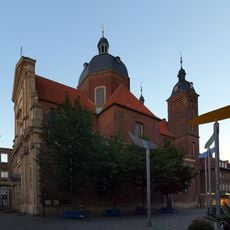
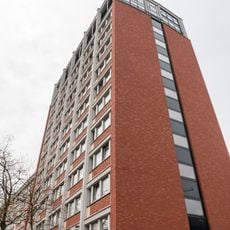
Landeshaus Münster, Administrative building in Münster, Germany.
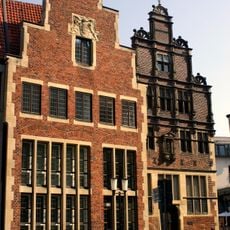
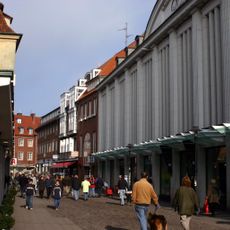
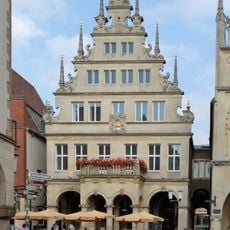
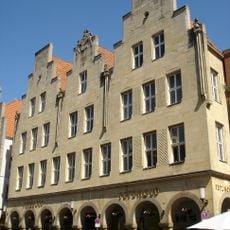
Landeshaus Münster is an administrative building in the city center featuring a five-story sandstone and brick facade. The structure displays Prussian architectural elements and is characterized by a spacious inner courtyard that gives the building an open spatial composition.
The predecessor building on the trapezoidal site was erected between 1896 and 1901 in Neo-Renaissance style for the Westfälischer Provinzialverband. Heavily damaged in the World War II air raids on Münster, it was rebuilt to plans by architect Werner March, begun in 1950 and largely finished in 1954, incorporating less damaged parts of the old structure. The decision followed the uncertain status of the Provinzialverband after Prussia's dissolution in 1946, resolved by the Landschaftsverbandsordnung of 1953.
The building serves as a working administrative center in the city core and shapes the streetscape with its classical design. Visitors notice how it connects historical purpose with current daily use and remains integrated into local civic life.
The building is centrally located in Münster and is easily accessible by public transportation. The surrounding streets allow pedestrian access, and proximity to bus and train stations makes a visit straightforward.
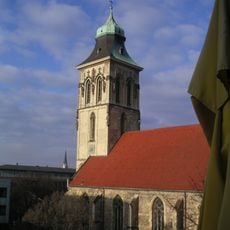
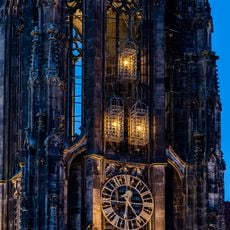
The clock tower on Fürstenbergstraße houses a glockenspiel that plays four times daily. The building also retains a petrol station in the Karlstraße garage courtyard, modelled on Werner March's type "Hannover" service stations designed for the Reichsautobahn, with touches of New Objectivity.
The community of curious travelers
AroundUs brings together thousands of curated places, local tips, and hidden gems, enriched daily by 93,950 contributors worldwide.